Real-Money Casino Table Games in Australia: How They Work
 Available in AU

A guide to live and software-generated formats, familiar table-game mechanics, and what the available information can establish about Australian online play.
Table of Contents
- How Online Table Games Work—and the Australian Legal Context
- Bitcoin and Other Payment Questions: What the Available Evidence Can—and Cannot—Tell You
- Why Table-Game Odds Cannot Be Ranked from These Facts
- The Basic Aim of a Few Familiar Table Games
- Searching for a Casino Nearby in Australia
- What Counts as an Online Table Game?
- Game Formats and Familiar Table-Game Mechanics
- Card-Game Basics: Hands, the Dealer and the Banker
- Roulette Variants and the Wheel’s Number Layout
- Poker at the Table: The Aim of the Game
- Pokies
How Online Table Games Work—and the Australian Legal Context
An online table game can be presented in more than one way. In a live-dealer format, a real dealer operates casino equipment while a video feed carries the session to players. In a software-generated version, there is no streamed physical game: a random number generator (RNG), a program that produces random results, determines the outcome. For a card game, that can mean deciding which cards are dealt; for roulette, it determines where the ball lands.
The distinction is about how the result is produced and shown, not about whether the activity is lawful in Australia. A live video stream does not make an online casino service a permitted local offering, and software-generated play is not exempt merely because no physical table is involved. Both formats can fall within real-money interactive casino gambling.
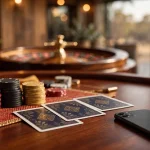
In a live-dealer game, the camera shows a dealer and equipment in a studio or casino setting. The stream lets a remote viewer see the dealing or other activity as it happens. The result comes from that physical process, rather than from a program selecting the outcome. The video is part of the game’s presentation, but it does not change the legal status of a service offered to people in Australia.
Choosing a real-money table-games casino means weighing the details that matter to you, such as licensing information, minimum deposits and payout timing. Use these concise notes as a starting point when considering your options.
1. LuckyVibe
License: Curacao Gaming Control Board OGL/2023/176/0095 (Hollycorn N.V.) LuckyVibe is listed with a Curaçao Gaming Control Board licence, OGL/2023/176/0095, held by Hollycorn N.V.
2. Golden Pokies
License: Curacao The available information for Golden Pokies identifies its licence jurisdiction as Curaçao.
3. Vegaz Casino
License: Curacao OGL/2024/1335/0780 · Min. deposit: EUR 20 Vegaz Casino is listed with Curaçao licence OGL/2024/1335/0780 and a minimum deposit of EUR 20.
4. Bizzo Casino
License: Curacao Gaming Control Board (TechSolutions Group N.V.) Bizzo Casino is listed with a Curaçao Gaming Control Board licence associated with TechSolutions Group N.V.
5. DragonSlots Casino
License: Curacao Gaming Authority (Jumpman Gaming Ltd) DragonSlots Casino is listed with a Curaçao Gaming Authority licence associated with Jumpman Gaming Ltd.
6. Kingmaker
Payout speed: crypto ~90 minutes, fiat 1-5 days · Min. deposit: A$30 Kingmaker lists a minimum deposit of A$30. Its stated payout timing is around 90 minutes for crypto and 1–5 days for fiat.
7. Uptown Pokies
License: Curacao (operating since 2017) · Min. deposit: A$20 Uptown Pokies is listed as operating since 2017, with a Curaçao licence and a minimum deposit of A$20.
8. GoldenCrown
License: Curacao Gaming Control Board OGL/2023/176/0095 (Hollycorn N.V.) GoldenCrown is listed with Curaçao Gaming Control Board licence OGL/2023/176/0095, held by Hollycorn N.V.
9. Wild Tokyo
License: Curacao · Payout speed: crypto 30-60 minutes, fiat 1-5 days · Min. deposit: A$10 Wild Tokyo lists a Curaçao licence and a minimum deposit of A$10. Its stated payout timing is 30–60 minutes for crypto and 1–5 days for fiat.
10. Ricky Casino
Payout speed: crypto under 1 hour, PayID 1-3 business days · Min. deposit: A$20 (A$30 to qualify for the bonus) Ricky Casino lists a minimum deposit of A$20, or A$30 to qualify for the bonus. Its stated payout timing is under an hour for crypto and 1–3 business days for PayID.
Software-based games work differently. The program generates outcomes without a dealer physically drawing cards or spinning a wheel for the player’s session. The interface may show cards, a wheel or other familiar table elements, but those images are not evidence that a physical game is taking place. In this format, the RNG determines the result that the game displays.
A polished interface, a visible dealer or familiar casino imagery cannot establish that an operator is authorised to provide real-money gambling services to Australian residents. Nor does the distinction between a live stream and software-generated results create a legal route around the rules.
The Australian restriction
Australia’s Interactive Gambling Act 2001 sets the central boundary for online casino services. Section 5 makes it unlawful for operators based in Australia to offer real-money interactive casino games to residents. That restriction covers table-game services, whether the outcome is generated by software or presented through a live dealer.
The Australian Communications and Media Authority (ACMA) is responsible for enforcing the rules. Its compliance work includes blocking unlicensed domestic platforms. That enforcement matters because a service being visible online, or appearing to accept registrations, is not proof that it may lawfully be offered in Australia.
The legal issue is the provision of the service, not a claim that the two game formats differ in their regulatory treatment. A company cannot make a prohibited real-money casino offer permissible simply by using a live stream instead of an RNG, or by describing its product as entertainment. For readers, the practical point is to distinguish what a game looks like from whether its provision to people in Australia is allowed.
Pokies & Casino Games in Australia: Slots and Tables
This also means that search results and promotional language should be treated cautiously. Terms such as “live casino” describe a format; they do not establish a local licence or authorisation. The presence of a dealer on screen does not verify who operates the service, where the operator is based or whether the offer complies with Australian law. The same caution applies to software games: an automated outcome is a technical feature, not a legal credential.
Real-money play is different from simply learning how formats work.
For a reader comparing descriptions, the clearest distinction is therefore straightforward: live-dealer games show a physical dealer and equipment over a live video feed, while software versions rely on an RNG to produce outcomes such as dealt cards or a roulette result. Neither presentation should be mistaken for evidence that real-money online casino table games may be offered locally. In Australia, the law restricts operators from providing those services, and ACMA’s enforcement includes blocking unlicensed domestic platforms.
Bitcoin and Other Payment Questions: What the Available Evidence Can—and Cannot—Tell You
Bitcoin is a payment method, not a kind of table game. A game’s name, rules and format do not tell you which payment methods a service accepts. Nor does a reference to Bitcoin establish that it can be used for a particular game. Those are separate questions, and treating them as one can make a payment claim sound like a description of the game itself.
Bitcoin is a payment method, not a kind of table game; its use does not establish the availability or rules of a particular game.
The same distinction applies when comparing Bitcoin with what some people call “normal” casino table games. That phrase might mean games played at a physical venue, or it might mean online games paid for by conventional methods. In either case, the payment method and the game are different parts of the experience. A payment label alone does not establish that the games differ, or that one payment route changes how a game works.
What a payment comparison can establish
A useful comparison would need to identify what is actually being compared: the payment method, the rules of the game, or the service offering access. Without that distinction, claims about “Bitcoin table games” can blur together questions that do not answer one another. For example, a method of paying does not, by itself, tell you whether a particular table game is available, what its rules are, or what conditions apply to a transaction.
The same caution applies to claims that Bitcoin is safer or faster, or that it provides a better choice of games. Those are specific claims about security, processing and availability. The word “Bitcoin” in a description is not, on its own, a basis for any of them. It is sensible to treat a payment claim as a claim about payment, rather than as proof of wider benefits.
3-Reel Slots in Australia: Rules, RTP and Play
If you encounter a service describing itself as a Bitcoin casino, keep the description in its proper category: it says something about how that service presents payment, not whether the service may lawfully offer real-money casino games to people in Australia. One label cannot settle the other question.
The Australian legal boundary
For people physically located in Australia, the legal position is central to any discussion of online casino payments. The Interactive Gambling Act 2001 prohibits operators from providing real-money online casino games to customers in Australia. That covers casino-style table games as well as other prohibited interactive gambling services. The Australian Communications and Media Authority enforces the rules and blocks unlicensed domestic platforms.
A payment method does not alter that legal boundary. Bitcoin, bank transfers and other ways of moving money do not turn a prohibited service into a permitted one. Equally, a service’s claim about payment does not establish that it is legally authorised to offer real-money casino play to Australians. The law addresses the provision of the service, not merely the route by which a customer might pay.
This distinction matters because payment-focused descriptions can make access sound like an ordinary shopping choice. It is not enough to ask whether a service names a payment method; the legal status of the underlying activity remains relevant. Australian law restricts locally based operators from offering these games, and offshore casino services are subject to active blocking and enforcement.
Legal Restriction
Under the Interactive Gambling Act 2001, it is unlawful for operators based in Australia to provide real-money interactive casino games to residents.
Keep payment and play separate
When you see Bitcoin mentioned alongside table games, read the two parts separately. Ask what the statement actually says about payment, and do not infer game availability, legality, safety or speed from the payment label alone. “Best” claims are especially unhelpful when they mix payment convenience with the qualities of a game: those are different comparisons, and one does not prove the other.
The basic point is simple: Bitcoin is not a table-game format, and a payment method does not decide the rules or legal status of a game. In Australia, the legal restriction on providing real-money online casino games remains the decisive context for any such payment discussion.
Why Table-Game Odds Cannot Be Ranked from These Facts
A claim that one table game offers the “best odds” is a comparison, not a description of the game’s name or format. To support it, you need a consistent measure of the player’s expected return or the house edge—the mathematical advantage retained by the casino over repeated play. Without comparable figures for the games being assessed, a ranking would be guesswork.
Even a house-edge chart needs context. A figure is meaningful only when it is tied to the specific game version, rules and wager being measured. If the underlying conditions differ, placing the figures side by side can create a misleading impression of a fair comparison. A chart that leaves those details unclear may look precise without answering what a player actually wants to know.
Mines Casino Game in Australia: What’s Verified
“Odds” can also mean different things. It might refer to the chance of a particular result, the payout attached to a wager, or the expected return across many rounds. Those measures are related, but they are not interchangeable. A bet with a larger possible payout does not automatically offer a better expected return, and a frequently occurring outcome does not by itself show that a game is more favourable to the player.
The time horizon matters, too. A mathematical expectation describes repeated play, not a promise about an individual session. Short-term results can vary, and a run of wins or losses cannot establish that a game has better underlying odds. A comparison should therefore be based on a stated mathematical measure, not anecdotes or recent outcomes.
For the same reason, there is no sound basis for naming a “worst” table game simply because it is familiar, fast-paced or associated with a particular style of play. Such labels require the same kind of evidence as a claim about the best game. Without like-for-like measures, the order of a list can reflect presentation rather than a demonstrated difference in expected return.
A careful comparison would identify the precise variant and wager, state the relevant rules and assumptions, and use a clearly defined measure for each entry. If a provider publishes a return figure, it should be clear which game and conditions it applies to; a figure for one version cannot automatically stand in for every version with the same broad name. The same caution applies when comparing a live-dealer format with a software-generated one: the format alone does not establish the mathematical advantage.
Attention: A ranking of the "best odds" is only informative if the figures are defined, comparable, and tied to specific rules and wagers.
For a player, the useful distinction is between information that describes how a game works and evidence that quantifies its long-run cost. Knowing the broad objective or outcome structure helps explain the activity, but does not, by itself, reveal its house edge. Rules and mechanics are not a substitute for a comparable probability calculation.
So a responsible answer to “what casino table games have the best odds?” is not an unsupported list. A ranking becomes informative only when its figures are defined, comparable and tied to the relevant rules and wagers. Until then, calling one game the best—or another the worst—says more than the numbers can justify.
The Basic Aim of a Few Familiar Table Games
Table games can centre on very different things: comparing a hand with a dealer’s, building a strong hand against other players, or wagering on what a roll of the dice will produce. Knowing the broad objective helps distinguish these formats, but it is not a complete set of rules. The details of a particular game determine how hands or outcomes are judged.
In blackjack, you compete against the dealer. The aim is to make a hand whose value is closer to 21 than the dealer’s hand. The target gives the game its central comparison: your hand is assessed in relation to the dealer’s, rather than simply ranked against every other player at the table. A basic description of the aim does not settle every question about how a hand is formed or what happens in each situation; those details belong to the rules of the version being played.
Crash Casino Games in Australia: Law and Risks
Poker has a different centre of gravity. Players contend to build the best possible poker hand. The objective is therefore about the strength of a hand, rather than getting closer to a numerical target set against a dealer. “Poker” covers more than one format, so the precise way hands are made and assessed depends on the game. The shared idea is the contest to produce the strongest hand under the relevant rules.
A dice-based table game is organised around a pair of dice and a wager on the outcome. The dice roll supplies the event being bet on; the game’s rules define which outcomes matter and how a wager relates to them. That makes its basic structure distinct from blackjack’s hand-versus-dealer comparison and poker’s hand-building contest. The broad description does not specify particular bets or explain how each possible result is treated.
These differences are useful when you are trying to understand what a game asks its players to do. Blackjack centres on a comparison with the dealer and the target of 21. Poker centres on constructing the strongest hand. The dice format centres on a roll and a wager about its outcome. They are not simply interchangeable versions of the same activity: each has a different object of attention.
A name or broad category alone does not tell you every rule. Before taking part in any table game, the relevant rules explain how its terms are used and what counts as a qualifying hand or outcome. That distinction matters especially when a general description makes a game sound simple: understanding its aim is only the starting point, not a substitute for knowing how that particular version works.
Blackjack
Focuses on a comparison with the dealer to achieve a hand value closer to 21.
Poker
Centres on a contest between players to construct the strongest possible hand.
Dice Games
Organised around the roll of a pair of dice and a wager on the resulting outcome.
Searching for a Casino Nearby in Australia
Looking for a casino close to you is a different task from looking for online table games. A physical casino is a venue you can travel to; an online service is accessed over the internet. The phrase “near me” only makes sense for the first kind of search, and the answer depends on your location. A result for another city or state may be of little practical use, even if it offers the games you have in mind.
Searches mentioning Miami or Ohio point to places in the United States, not Australian destinations. For an Australian trip, keep the location specific: the city, suburb or region matters more than a broad request for the nearest casino. Check that a result refers to a physical venue and that its details are current before planning a visit. A map pin or a generic list is not, by itself, confirmation that a particular venue offers table games.
It is also worth separating the venue from the game. A casino may be associated with table games, but a broad result does not establish which games are available at that venue or whether the information is up to date. If a visit is the aim, confirm the venue’s own current information rather than treating a search result as a promise. This is a practical distinction, not a recommendation of any particular casino.
Online results can blur that distinction. A service described as a casino “near” you may be an online gambling site rather than a nearby building. Its availability on a screen does not make it a local physical casino, and it should not be treated as a location-based recommendation. The wording can sound convenient; it does not answer where a venue is or whether you can visit it.
Bonus-buy slots in Australia: features and legality
There is a legal distinction too. Under Section 5 of Australia’s Interactive Gambling Act, operators based in Australia are prohibited from offering real-money interactive casino games to residents. That restriction concerns online casino services offered by locally based operators; it is not a statement that a search result has verified a physical venue or its table-game offering. Keeping those categories separate helps avoid mistaking an online listing for a local casino.
If you mean a place to visit, focus on physical venues in the area you actually plan to be, then verify their location and current details. If you mean playing online, proximity is not the useful test: an online page does not become an Australian venue because it appears in a local search. And a nearby online service should not be inferred from the fact that a physical casino may exist somewhere in your area. The word “nearest” answers only a distance question; it does not establish what kind of service is being offered or whether it is lawful.
What Counts as an Online Table Game?
A casino table game is a game presented in the style of a casino table rather than a machine game. Online, that label can describe two different ways of producing and showing play: a live dealer on camera, or an outcome generated by software. The distinction is about how the game is run, not simply how it looks on a screen.
How results are produced
Live-dealer games use real equipment and a video stream to show a physical process. Software-based games use a Random Number Generator (RNG) to determine the outcome digitally.
In a live-dealer format, a real dealer uses real casino equipment, and a live video stream carries the action to players. The screen therefore shows a person and physical equipment in a casino setting. The video is not a recording presented as though it were happening now; the defining feature is that the dealer and equipment are real and the footage is streamed live.
A software-based table game works differently. Its result is determined by a Random Number Generator, or RNG: software that produces a random outcome for the game. In a card game, the RNG determines which cards are dealt; in online roulette, it determines where the ball lands. The screen may depict a table or wheel, but the visual presentation does not itself decide the result. In this format, the software does.
That gives you a useful way to understand what people mean by online casino table games. Some refer to live-dealer games, where the action is filmed, while others refer to digital versions whose outcomes come from an RNG. Both are online formats, but the underlying process differs. A realistic-looking screen alone does not tell you which one you are viewing; the relevant distinction is whether a live dealer and equipment are being streamed or software is generating the outcome.
Lightning Link Online in Australia: Venue Play Explained
The word “table” can also be misleading if taken too literally. It describes a familiar casino-game format, not a guarantee that a physical table is involved in the online version. A streamed game has real equipment in the dealer’s setting; a software-generated game does not depend on a live table to determine its result. In either case, what appears on your screen is the way the game is presented to you, while the method behind the outcome is the key difference.
These definitions describe formats, not an endorsement or indication that a service is legally available to Australian residents. Under Australia’s Interactive Gambling Act 2001, providing real-money online casino games to people in Australia is prohibited. That restriction applies regardless of whether a game uses a live stream or software-generated outcomes.
Game Formats and Familiar Table-Game Mechanics
Table games are not one single kind of contest. Some centre on a player’s hand, some compare a player’s position with a Banker’s, and others ask players to wager on a dice outcome. These are useful ways to distinguish familiar mechanics, not a complete catalogue or a recommendation to play.
In blackjack, the player’s hand is measured against the dealer’s: the aim is to finish with a value closer to 21. That makes the dealer the direct point of comparison. The basic description does not, by itself, tell you every rule that can affect a hand, so a short label should not be mistaken for a full explanation of how a particular game works.
Do
- Use specific rules to understand how a hand is formed
- Distinguish between different table-game mechanics
Don’t
- Treat a short label as a full explanation of a game
- Assume all table games are interchangeable
Another card-table structure lets you place a wager on the player’s hand, the Banker’s hand or a tie. The choice is about which of those outcomes you predict; it is distinct from competing directly against a dealer as in blackjack. The names “player” and “Banker” describe the sides in that format and should not be confused with a general claim about who controls a game.
A dice-based table game follows a different pattern: players roll a pair of dice and bet on the outcome. Here the central event is the result of the roll, rather than the value of a card hand. That description identifies the basic structure, but not the range of possible wagers or the detailed rules attached to them.
Poker is also a hand-based contest, with players trying to build the best possible poker hand. That broad aim sets it apart from formats where the wager is on a dealer comparison, a Banker or player outcome, a tie, or a dice result. It does not specify the rules of any particular poker variation.
These mechanics can help you understand what a table-game description is referring to without treating every game as interchangeable. They also do not establish that a real-money version is available lawfully in Australia. Under the Interactive Gambling Act 2001, operators may not provide real-money online casino games, including table games, to people located in Australia. A description of familiar formats is therefore informational, not an invitation or endorsement.
Five-Reel Slots in Australia: Bonuses, RTP and Play
Card-Game Basics: Hands, the Dealer and the Banker
Card games at a casino table can use different ways of defining the contest. In blackjack, you play against the dealer: the stated aim is to finish with a hand value closer to 21 than the dealer’s hand. The comparison is between your hand and the dealer’s, rather than between your hand and those of the other players.
That simple description identifies the central roles, but it is not a complete set of rules. It does not explain how a hand is formed, what actions are available, or how every possible result is settled. Those details should not be assumed from the game’s name alone. If you are reading a rules page, look for the specific instructions that explain how hands are compared and what happens in different outcomes.
Another card-table format is commonly known as baccarat. Here, the bet can be placed on the player’s hand, the Banker’s hand, or a tie. “Player” and “Banker” identify the two hands named in the betting options; they do not mean that you are wagering against another person at the table. A tie is a separate possible selection in this description, rather than simply another name for either hand.
The contrast is useful when comparing casino card games. Blackjack sets out a direct contest between a player and a dealer, judged by closeness to a target value. Baccarat, by contrast, is described through a choice among the player hand, the Banker hand, and a tie. These are different ways of framing a card game, so the labels should not be treated as interchangeable.
While blackjack is a direct contest against a dealer, baccarat involves wagering on the player’s hand, the Banker’s hand, or a tie.
The basic mechanics alone do not tell you the full conditions of play. They also do not establish which game is more favourable or how a particular wager is resolved. For that, the rules for the specific game and table would matter. In Australia, this overview is descriptive: real-money online casino games are prohibited services when offered to people physically located in the country.
Roulette Variants and the Wheel’s Number Layout
Roulette has several versions, with European, French and American among the main formats. Their most clearly stated difference is the wheel’s numbered pockets: European and French roulette have 36 numbered pockets and a green zero, while the American layout has a green zero and a green double zero.
That distinction gives you a straightforward way to tell the layouts apart. A wheel with a single green zero matches the stated European and French arrangement; one with both zero and double zero is the American arrangement. The European and French layouts share the same number count and zero description in these respects. The American layout differs by including the additional green pocket marked 00.
Best Pokie Machines to Play in Australia: A Guide
The shared description of the European and French wheels does not establish that every detail of those versions is identical. Nor does the pocket count alone provide enough information to rank versions by their odds or say which is preferable. A wheel’s layout is a useful identifying feature, not a complete account of how a game compares with another.
When reading a table’s rules, check which version is named and what its wheel displays. The name helps identify the format, while the visible zero pockets confirm the distinction described here. This is more reliable than assuming all roulette tables use the same layout simply because they share the game’s name.
These terms describe roulette formats, not a recommendation to play them. In Australia, the Interactive Gambling Act 2001 prohibits operators from providing real-money online casino games, including roulette, to people located in the country. The layout distinction can still help you understand what the labels mean when roulette is discussed, without implying that an online table is lawfully available to Australian residents.
Seven-Reel Slots in Australia: Bonuses, RTP and Rules
Poker at the Table: The Aim of the Game
Poker is a contest in which players try to build the best possible hand. That simple aim is what gives the game its shape: each player’s focus is on the hand they can make, and on how it compares with the hands of the other players.
The word “hand” refers to a player’s set of cards in the game. The objective is not merely to collect cards, but to form the strongest possible combination within the version being played. Players are therefore competing against one another for the best hand, rather than pursuing a target such as reaching a particular total.
That is the central idea behind casino poker table games, even though the label covers more than one format. A name alone does not tell you exactly how a particular version is played. The shared point is the contest to assemble the strongest hand; the details of a game should be understood from its own rules rather than assumed from the word “poker.”
Low-Volatility Slots in Australia: What They Mean
This distinction matters when you encounter different types of poker at a casino table. The broad objective gives you a useful starting point, but it is not a complete description of any one game. It does not, by itself, explain how cards are dealt, what choices players make, or how a winner is determined. Those details belong to the specific version, not to the basic aim shared by poker as a category.
Poker’s appeal rests on that comparison between hands: players seek to build the best one they can. This is a description of the game’s objective, not a recommendation to play. In Australia, real-money online poker services are prohibited when offered to people in the country; the basic aim of poker does not change that legal position.
Can you play table games online for real money?
Yes, offshore platforms accept Australian players for real-money table games. Australian-based operators are prohibited from offering these services to residents.
What is the legal status of online table games for Australian players in 2026?
Australian-based operators are prohibited under Section 5 of the Interactive Gambling Act 2001 from offering real-money interactive casino games to residents, and ACMA enforces the rules. Offshore platforms accept Australian players, but a live-dealer or RNG format does not itself establish that a service is authorised in Australia.
Can you legally gamble online in Australia?
Yes, Australian players can play at offshore online casinos, while operators based in Australia are prohibited from offering real-money online casino games to residents.
Do casino bonuses actually benefit table game players?
They can, but table games such as blackjack and roulette may contribute only 10–20% toward wagering requirements, and some games may be excluded. Check the bonus terms for game contributions and maximum bets, since exceeding a limit can void the bonus and related winnings.
Pokies

3-Reel Slots in Australia: Rules, RTP and Play
A practical guide to three-reel slots, bonus mechanics, RTP, paytables and the rules that apply...

Five-Reel Slots in Australia: Bonuses, RTP and Play
Understand bonus triggers, RTP information, free-play options and what to check in a game’s rules...

Seven-Reel Slots in Australia: Bonuses, RTP and Rules
A practical guide to bonus mechanics, paytables, RTP, free play and the limits of identifying...

Bonus-buy slots in Australia: features and legality
Learn what direct entry to a slot feature means, how to check game details, and...

High-Volatility Slots in Australia: What to Know
High volatility can mean longer stretches without meaningful payouts, but it cannot predict when a...

Low-Volatility Slots in Australia: What They Mean
Low volatility describes a pattern of relatively frequent, modest wins, not a promise that any...

Best Pokie Machines to Play in Australia: A Guide
Understand the rules for online play, the differences between machines and the factors that can...

Progressive Jackpot Slots: How Pools and Triggers Work
Progressive jackpots depend on wager contributions, game-specific triggers and eligibility rules, so pool size alone...

RTP Slots in Australia: How Return to Player Works
RTP is a long-run statistical measure, not a forecast for an individual session or a...

Video Slots in Australia: How Mobile Play Works
A practical overview of mobile play, free-spin features, RNG independence, RTP and the limits of...

Casino Dice Games in Australia: Formats and Rules
A practical guide to dice-based game formats, the craps table, rules to check and the...

Crash Casino Games in Australia: Law and Risks
A practical look at offshore casino rules, crash-game mechanics, crypto withdrawals, free play and wagering...
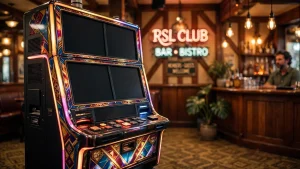
Lightning Link Online in Australia: Venue Play Explained
The guide distinguishes venue-machine play from online casino listings and explains free credits, game features...

Live Baccarat Online in Australia: Rules and Risks
This guide explains Australia's online casino restriction and the practical differences between live and RNG...

Live Blackjack Online Casinos in Australia: Legal Context
Live dealer presentation does not change blackjack’s classification or make an Australian-licensed online casino available....

Live Roulette in Australia: Dealers, Rules and Law
A practical overview of Australian online-gambling restrictions, live-table rules, roulette odds, and what English-speaking dealers...

Mines Casino Game in Australia: What’s Verified
The guide checks what can be established about Mines access, demos, bonuses and withdrawals, while...

Plinko Casino in Australia: 2026 Guide to Key Checks
Game names and casino listings alone do not confirm how Plinko works, who made it...

Pokies Tips and Tricks: What Actually Helps
A practical guide to randomness, game selection and play habits—without treating tips as a way...