Mines Casino Game in Australia: What’s Verified
 Available in AU

The guide checks what can be established about Mines access, demos, bonuses and withdrawals, while separating evidence from unsupported claims.
Table of Contents
- Pokies and Game Providers: What the Available Facts Establish
- What Can Be Verified About Mines Casino Games
- Online Access and Australia’s Gambling Rules
- Free Play: What the Evidence Does—and Doesn’t—Tell You
- Demo Searches and the Limits of the Available Information
- Bonus Codes, Wagering Requirements and the Fine Print
- Real-Money Searches: Withdrawals and Verification
- Where to Play: A Cautious Answer for Australian Readers
- Strategy Claims, Risk and Victorian Pokies Losses
- Casino Guru Searches: No Verified Mines-Specific Details
- Pokies
Pokies and Game Providers: What the Available Facts Establish
The names associated with Australian-themed pokies include Big Red, Lightning Link, Queen of the Nile, Boomerang Bonanza, Kangaliens, Red Sands and Redroo. They are titles, not provider names. A title alone does not tell you who made a game, what its rules are or what return-to-player figure applies. Those details need to be tied to a specific game rather than inferred from its name or theme.
Aristocrat, KA Gaming, Evolution Gaming, Microgaming, NetEnt, Play’n GO, Pragmatic Play and Quickspin are game providers. That identification does not mean every provider has a game with an Australian theme, or that any particular title belongs to one of them.
RTP, or return to player, is a theoretical measure of the share of wagers a game returns over extended play. It is not a forecast of what you will get back in a session, and it does not guarantee that an individual player will receive any particular amount. Results can vary sharply over shorter periods.
That distinction matters when reading a review or game description. A percentage presented beside a provider’s name is useful only if it applies to the exact game and version being discussed. A provider-level range should not be treated as the RTP of every title from that provider. Nor does an RTP figure describe a game’s theme, volatility, bonus features or suitability for a particular player.
If you’re looking for a casino to play Mines in Australia in 2026, check the available operator details before choosing where to play. This list highlights the specific licensing, deposit, and payout information provided for each option.
1. LuckyVibe
License: Curacao Gaming Control Board OGL/2023/176/0095 (Hollycorn N.V.) You can note LuckyVibe’s listed Curacao Gaming Control Board licence, OGL/2023/176/0095, held by Hollycorn N.V.
2. Golden Pokies
License: Curacao Golden Pokies is listed with a Curacao licence. No further operator details are provided here.
3. Vegaz Casino
License: Curacao OGL/2024/1335/0780 · Min. deposit: EUR 20 Vegaz Casino lists Curacao licence OGL/2024/1335/0780 and a minimum deposit of EUR 20.
4. Bizzo Casino
License: Curacao Gaming Control Board (TechSolutions Group N.V.) Bizzo Casino is listed under the Curacao Gaming Control Board, with TechSolutions Group N.V. named.
5. DragonSlots Casino
License: Curacao Gaming Authority (Jumpman Gaming Ltd) DragonSlots Casino is listed with the Curacao Gaming Authority, and Jumpman Gaming Ltd is named.
6. Kingmaker
Payout speed: crypto ~90 minutes, fiat 1-5 days · Min. deposit: A$30 Kingmaker lists a minimum deposit of A$30. Its stated payout speed is around 90 minutes for crypto and 1–5 days for fiat.
7. Uptown Pokies
License: Curacao (operating since 2017) · Min. deposit: A$20 Uptown Pokies is listed as operating since 2017, with a Curacao licence and a minimum deposit of A$20.
8. GoldenCrown
License: Curacao Gaming Control Board OGL/2023/176/0095 (Hollycorn N.V.) You can note GoldenCrown’s listed Curacao Gaming Control Board licence, OGL/2023/176/0095, held by Hollycorn N.V.
9. Wild Tokyo
License: Curacao · Payout speed: crypto 30-60 minutes, fiat 1-5 days · Min. deposit: A$10 Wild Tokyo lists a minimum deposit of A$10. Its stated payout speed is 30–60 minutes for crypto and 1–5 days for fiat.
10. Ricky Casino
Payout speed: crypto under 1 hour, PayID 1-3 business days · Min. deposit: A$20 (A$30 to qualify for the bonus) Ricky Casino lists a minimum deposit of A$20, or A$30 to qualify for the bonus. Its stated payout speed is under an hour for crypto and 1–3 business days for PayID.
Australian imagery can make a title recognisable, but it is not evidence of where the game was made or who supplied it. Similarly, a game name that sounds like a familiar product does not establish a relationship to another title. A reliable identification needs a specific game listing that connects the title with its provider; the name by itself is not enough.
This is also why a general description of pokies should not be mistaken for a review of a particular game. A review can only support claims about features or performance when it identifies the title and the relevant details. If it names a provider but gives no exact game, you cannot safely transfer its claims to a title that merely shares a theme or a similar name.
The same care applies to comparisons. RTP percentages are not a complete measure of a game, and comparing a provider’s general range with a single title’s figure would mix different kinds of information. Even where an exact RTP is stated, it describes a long-run theoretical return, not a dependable outcome for you. A higher stated percentage is not a promise of a win, and it should not be read as a reason to play.
The named products are worth keeping distinct from providers: Big Red, Lightning Link, Queen of the Nile, Boomerang Bonanza, Kangaliens, Red Sands and Redroo are product names, while Aristocrat and the other names above are provider names. That distinction may sound elementary, but product pages and informal descriptions do not always make it clear. Checking which kind of name you are looking at is a sensible first step before relying on claims about a game.
For readers comparing game information, the useful questions are specific: does the description identify the exact title, does it name the provider, and does any RTP figure apply to that title rather than to a broader catalogue? If those links are unclear, the claim should be treated cautiously.
Do
- Connect the title to a specific game listing
- Verify the provider and exact game version
- Check if the RTP applies to the specific title
Don’t
- Infer game details from the theme or name
- Treat provider-level RTP ranges as game RTP
- Mistake a general description for a game review
What Can Be Verified About Mines Casino Games
“Mines” is not enough, on its own, to identify a particular casino game. A page or listing using that label may not establish who made the game, which version it refers to, or whether another product with a similar name is involved. Without a clearly identified title and provider, details attached to one listing should not be treated as facts about every game called Mines.
That distinction matters because a game’s name is not a rulebook. The label does not establish how a round begins, what choices are available, how a result is determined, or what ends a round. Nor does it show whether the product is a standalone game or part of a larger collection. Those details need to come from information tied to the specific product, not from assumptions based on its name.
What the name does not tell you
A listing headed “Mines casino game” may sound specific while leaving important questions unanswered. It does not, by itself, confirm:
- the game’s developer or provider;
- the rules and sequence of play;
- how outcomes are generated;
- whether the title has multiple versions;
- what features, if any, are available.
These are separate points. A provider name shown elsewhere on a site does not automatically prove that the provider made the Mines title. Likewise, a description of a game with a similar name cannot safely be transferred to another listing. Names can be reused, shortened or presented without enough detail to distinguish products.
The same care applies to claims about how the game works. A description may use familiar terms or images, but that is not proof of the rules behind them. Before treating any explanation as authoritative, you would need to be able to connect it to an identifiable game and its own published instructions. If that link is absent, the prudent conclusion is that the specific mechanics remain unconfirmed.
Why version details matter
Even when a page does identify a title, a general description may not answer every practical question. Rules and features belong to a particular version. A statement about one release is not evidence that another release behaves the same way, and a promotional summary is not a substitute for the game’s instructions.
For a reliable description, the identifying details should match across the listing, the provider information and the rules shown for the product. If those details conflict—or if one of them is missing—you cannot confidently tell which version the explanation concerns. A screenshot, a short label or a search result is not enough to settle that question.
Plinko Casino in Australia: 2026 Guide to Key Checks
This is also why a provider should not be guessed from a game’s visual style or from the other titles displayed nearby. A casino page can present products from different developers in one place. The surrounding catalogue does not establish who made a particular game.
Separating description from proof
When reading a Mines listing, separate what it states from what it demonstrates. A site may call something a Mines game; that tells you how the site labels it, not necessarily whether it is a distinct, identifiable product. A page may describe a feature; that is a claim about the feature, not independent confirmation that it operates as described. A named provider is useful only if the connection to the title is clear.
This does not mean every brief listing is wrong. It means the level of certainty should match the information available. If a product cannot be identified precisely, claims about its rules, provider or special features should remain attributed to the page making them rather than repeated as settled facts.
For Australian readers, the year in a page title does not itself authenticate a game or establish that its details are current. Product names and descriptions can change, so any statement tied to a particular release needs to identify that release clearly. Without that, a confident-sounding summary may blur separate products or repeat a description that no longer applies.
Attention: A game’s name is not a rulebook and does not establish how a round is played, how outcomes are generated, or which provider made the game.
The most accurate answer to questions about a specific Mines casino game is therefore limited: the name alone does not establish its rules, provider or features. Treat those details as unconfirmed unless they are clearly tied to an identifiable title and its own instructions. Do not base a gambling decision on an assumed rule set or on a description that cannot be matched to the game in question. Gambling is for adults aged eighteen or over, and it can cause serious harm to vulnerable people.
Online Access and Australia’s Gambling Rules
The legal position is more restrictive than the phrase “online casino” may suggest. Under the Interactive Gambling Act 2001, operators must not provide real-money online casino services to people in Australia. The prohibition covers casino-style games such as slots, poker, blackjack and roulette. A Mines-style game offered for real money would fall within the online casino context; its name or format does not create an exception to the law.
Real-Money Casino Table Games in Australia: How They Work
The Act places the obligation on the operator, not on an Australian player. Players are not criminalised for accessing an offshore casino. That distinction matters, but it does not make the service lawful to offer in Australia or remove the practical risks of dealing with a business outside the local system. A site accepting Australian dollars or another Australian payment method is not thereby authorised to serve Australian customers. Offshore casinos may accept local payments while operating under licences issued elsewhere.
The Australian Communications and Media Authority, or ACMA, is the federal regulator responsible for enforcing the Act and monitoring compliance with federal interactive gambling rules. Its role includes action against services that provide prohibited gambling to Australians, as well as sites advertising those services. ACMA can ask Australian internet service providers to block websites that offer prohibited interactive gambling or promote it to people in Australia.
Blocking is a practical enforcement measure, not a change to the underlying law. A site may become inaccessible through an Australian connection after an intervention, while its operator remains based overseas. Conversely, a website that still loads is not proof that it is legally permitted to provide casino games to Australians. Access and legality are different questions.
Casino Dice Games in Australia: Formats and Rules
ACMA’s enforcement record gives some indication of the scale of that work. Following enforcement actions, the regulator has blocked more than 1,455 gambling and affiliate websites since November 2019. These blocks have targeted both gambling services and sites that direct users towards them. The figure describes websites blocked over time; it should not be read as a count of Mines games or as a list of currently available services.
Reported totals for services leaving the Australian market since ACMA began enforcing the rules in 2017 do not match. One account puts the number above 210; another gives a figure above 190. Those are competing reported totals, not a single precise count. In either case, withdrawals are part of the enforcement picture, alongside website blocking. A service’s withdrawal from the market does not mean every related website has disappeared, and a blocked address does not establish what an operator may do next.
For someone searching for a Mines casino game online, the key issue is therefore not simply whether a page can be opened or whether it displays a foreign licence. The relevant legal question is whether an operator is offering a prohibited real-money casino service to people physically in Australia. A foreign licence does not turn that offer into a locally lawful one. Nor does an Australian payment option establish that ACMA has approved the site.
Legal Warning
Under the Interactive Gambling Act 2001, it is prohibited for operators to provide real-money online casino services to people in Australia.
The law is directed at operators, while the regulator’s measures can affect what Australian users can reach. That combination can make the situation confusing: a service may appear to welcome Australian customers, yet the law restricts its provision of online casino games here and ACMA can seek to block access to it. A search result, an account-registration screen or a payment method is not a reliable guide to legal status.
The practical boundary is clear: real-money online casino services must not be offered to people in Australia, and ACMA has powers to act against prohibited services and their advertising. The fact that a player is not criminally liable does not remove that restriction on operators or make offshore access dependable.
Free Play: What the Evidence Does—and Doesn’t—Tell You
A free-play label can sound straightforward: try a Mines-style game without staking money. But the label alone does not establish what is being offered. It does not confirm that a particular Mines game has a free mode, explain how that mode works or show whether it is connected to a real-money service. Those details matter before you treat “free” as a meaningful description.
The term can cover different arrangements. A site might use it to describe a playable version with no cash stake, a limited preview, or a promotion with conditions. Those are not interchangeable. Without clear product information, you cannot assume that a free version uses the same rules as a paid one, or that it exists at all. Nor should you infer that a game is safe or genuine simply because its page uses the word “free”.
Crash Casino Games in Australia: Law and Risks
What “free” should mean in practice
If a page claims that play costs nothing, look for a plain explanation of what the claim covers. Does it mean no deposit is needed, or only that a first step is free? Is payment required to continue, unlock features or claim a reward? Can any balance be withdrawn, or is it only a display of in-game points? A page that leaves those distinctions unclear gives you little basis for deciding what you are agreeing to.
Read the terms before entering personal or payment details. A free label does not, by itself, establish that there are no later charges, conditions or requests to register. Be cautious if the explanation is hard to find, if the wording changes between the promotion and the terms, or if you are urged to act before you can understand the offer. You should not have to guess what “free” means.
A Mines-style title also does not prove that a page belongs to the maker of a particular game. Names and images can be copied, and a convincing-looking page is not proof of authenticity. Treat requests for passwords, identity documents or payment information with care, especially when the page has not clearly explained who operates it and why it needs those details. Do not provide sensitive information merely to see whether a game will load.
Verifying Free Offers
- Read the terms for any hidden charges or registration requirements
- Confirm if a deposit is required to unlock features
- Check if any balance can actually be withdrawn
- Verify the identity of the organisation operating the page
Free access is not a finding of safety
“Fake casino Mines” can describe a concern about impersonation, but the phrase itself is not evidence that any particular page is fake. Equally, a page appearing in a search or using casino language is not proof that it is genuine. Consider what the page actually identifies: the game, the organisation responsible for it, the terms attached to access and the purpose of any information it requests. If those points are obscured, walking away is more sensible than trying to resolve the uncertainty by registering.
In Australia, real-money online casino games are prohibited for operators to provide to people physically in the country under the Interactive Gambling Act 2001. A “free” label should not distract you from checking whether a page is also inviting you into a paid casino service. This is a distinction about what is being offered, not a guarantee that a free-labelled page is lawful, reliable or free of risk.
Free access also does not make gambling harmless. If play involves risking money, it can cause serious harm, particularly for people experiencing vulnerability. You must be 18 or older to gamble. A no-cost label is not a reason to overlook age restrictions, pressure to spend or other warning signs.
For a Mines game specifically, do not assume that a free option exists or that its terms and mechanics are settled simply because a page uses familiar wording. The useful question is not whether “free” appears in the title, but whether the offer is clearly described and whether it asks you to accept conditions or provide information you do not understand.
Demo Searches and the Limits of the Available Information
A Mines demo sounds like a straightforward idea: a version of a game that lets you see how it works without treating the session as ordinary paid play. But the word “demo” on a page is only a label. It does not, by itself, establish who made the game, whether the version is genuine, or what its rules and functions are.
Pokies Tips and Tricks: What Actually Helps
That distinction matters because a familiar title can be used loosely. A page may describe a game as Mines without identifying a provider or giving enough detail to distinguish it from another game with a similar name. Likewise, a demo claim does not tell you whether the page presents a playable version, a description, or simply a link to something else. Those details need to be stated plainly before the label can be useful.
If you encounter a page describing a Mines demo, look for information that connects the claim to a specific game: its full title, the provider, and a clear explanation of what the demo contains. Rules should be available before you begin, not left to inference from the name. If those details are absent or inconsistent, there is little basis for treating the page as an identifiable demo of a particular Mines game.
The term also should not be taken to mean that every feature of a paid game is present in the same way. A demo label alone cannot establish whether rules, outcomes or other functions match another version. Nor does it establish that a version exists for every device or account type. Those are claims that require specific information, rather than assumptions drawn from the word “demo”.
Seven-Reel Slots in Australia: Bonuses, RTP and Rules
For Australian readers, this is a question of identification, not a recommendation to use a casino game. Real-money online casino services are prohibited for operators when offered to people in Australia under the Interactive Gambling Act 2001. A demo label does not change that legal position or establish that a service is lawful.
The practical standard is modest: treat “Mines demo” as a description to verify, not as proof of a defined game or a particular experience. A clear provider and title, stated rules, and an accurate account of what the page offers are more informative than the label alone. Without those particulars, the safest conclusion is limited: the page uses the word “demo”; the word does not tell you enough to judge what is being presented.
Bonus Codes, Wagering Requirements and the Fine Print
A bonus code or no-deposit offer can sound like spendable money, but bonus funds are not cash you can withdraw on receipt. Their terms may require you to place bets before any winnings linked to the bonus become eligible for withdrawal. Those conditions are called wagering requirements.
Video Slots in Australia: How Mobile Play Works
The multiplier matters because it applies to a stated amount. One specialist review illustrated this with a $100 bonus carrying a 40x requirement: the player would need to make $4,000 in bets before bonus-derived winnings could be withdrawn. That is an example reported by one review, not a universal offer or a rule that applies to every promotion. A headline figure alone does not tell you how much wagering is required, which bets count, or what happens if you do not meet the conditions.
A specialist review also described wagering requirements in the 30–50x range. Treat that as a report of terms discussed in that review, not as a dependable market-wide standard. The operator’s written conditions for a particular offer determine the actual requirement, if an offer exists. A code does not, by itself, establish that the offer is available to you or that its terms are favourable.
Games may also count differently toward the requirement. In one specialist review, blackjack was said to contribute only 10%. If a game contributes a smaller share, playing it may reduce the outstanding requirement more slowly than the same amount wagered on a game that counts fully. Do not assume every game qualifies or contributes equally: check the specific terms before treating any play as eligible.
Read the conditions for the qualifying amount, eligible games, contribution rates, expiry rules and any maximum withdrawal attached to bonus-derived winnings. If those details are unclear, the advertised value is not enough to assess what you would actually receive. A “no-deposit” label does not remove wagering conditions; it describes how the bonus is presented, not whether its proceeds can be withdrawn immediately.
For Australian readers, promotional wording should not be mistaken for permission to provide online casino gambling locally. The Interactive Gambling Act 2001 prohibits operators from offering real-money online casino games to people in Australia. A bonus code cannot change that legal position.
Real-Money Searches: Withdrawals and Verification
A Mines game played for real money may make a withdrawal look like the final step. In practice, the amount you can request and the checks required before payment depend on the operator’s terms. For people in Australia, there is a more basic point: the Interactive Gambling Act 2001 prohibits operators from providing real-money online casino games to customers in Australia. This is not a recommendation to use an offshore casino.
Withdrawal Process
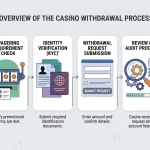
Offshore sites often set minimum withdrawal thresholds between A$75 and A$150 and typically require KYC (Know Your Customer) verification using a passport, driver’s licence, and utility bill.
Offshore sites commonly set minimum withdrawal thresholds between A$75 and A$150. If your balance is below the stated minimum, you may not be able to request a payout yet. Read the withdrawal conditions before depositing, and check whether the threshold applies to each payment request or to a particular payment method. Do not assume a balance shown on screen can be withdrawn in full.
A first cashout commonly triggers KYC, short for “know your customer” checks. An operator may ask for a passport or driver’s licence, along with a utility bill to confirm your address. The names and details should match the account information. If documents are unclear, incomplete or inconsistent, processing can be delayed while the operator asks for further evidence.
Check the terms for the accepted document formats and submission process, and avoid sending identity documents through an unverified channel. Keep copies of what you submit and of any messages about the withdrawal. These precautions do not make an offshore service lawful or remove the risk that a payment may be delayed or disputed.
A real-money balance is not the same as money already in your bank account. Before making any financial decision, consider whether you can afford to lose the amount involved. Gambling can cause serious harm, particularly for people who are vulnerable to it; it should not be treated as a way to earn income or recover losses. Only people aged 18 or older should gamble.
3-Reel Slots in Australia: Rules, RTP and Play
Where to Play: A Cautious Answer for Australian Readers
If you are trying to find a place to play Mines for money from Australia, the practical answer is constrained by local law. The Interactive Gambling Act 2001 prohibits operators from providing real-money online casino games to people in Australia. Casino-style games offered online, including slots and table games, fall within that restriction. A site describing itself as a Mines casino does not change the legal position.
The rules apply to the operator, not as a criminal penalty on an individual player. That distinction does not make an offshore service safe or lawful for the business providing it. The Australian Communications and Media Authority (ACMA) enforces the federal rules and actively blocks offshore gambling sites. A website appearing in search results, or loading at one point, is not evidence that it is permitted to serve Australian customers or will remain accessible.
This also matters when a site uses a familiar name such as Lucky Mines. A name, logo or Australian-facing payment option is not proof of Australian authorisation. Offshore casinos may accept Australian payments while operating under foreign licences; those licences do not permit them to offer prohibited online casino services to people in Australia. Avoid treating a payment method or a claim of international licensing as a local safeguard.
So, if “where to play Mines casino” means a real-money online casino available to Australians, there is no lawful local online casino service to recommend. This is not a matter of choosing the right offshore operator: promoting or directing readers to one would obscure the restriction and ACMA’s blocking role. Access can also be interrupted by enforcement, so a link that works today is no assurance of continued access.
Lawful Access
There is no lawful local online casino service to recommend for real-money Mines play in Australia due to the Interactive Gambling Act 2001.
If your interest is the game rather than wagering, keep that separate from real-money casino play. Do not assume that a site’s “free” label makes its other services suitable or lawful, or that a brand name establishes what the game contains. For personal support with gambling concerns, Australia’s Gambling Help Online is a support service; it is not a place to play.
Strategy Claims, Risk and Victorian Pokies Losses
A Mines strategy claim should be treated as a claim, not as a reliable way to secure a win. Without a clearly stated set of game rules and evidence that a method changes the odds, a sequence of picks or a betting pattern cannot establish an advantage. The same caution applies to material that pairs Mines with Spribe: a provider name or strategy label does not, by itself, show that a particular game follows those rules or that a method works.
This distinction matters because gambling outcomes can carry real costs. Problem gambling can cause serious harm, particularly for vulnerable people. No system can make gambling a dependable source of income, and continuing in an attempt to recover losses can deepen the harm.
A report published by gamble.com.au put Victorian poker-machine losses at $2.6 billion over the year it covered, more than $44.7 million above the figure it gave for 2015. It also reported that the Epping Plaza Hotel in Melbourne’s north generated more than $21 million from 100 machines over the previous year. These are reported figures for specified periods and a named venue, not a prediction of what any individual will lose. They do, however, show why discussion of gambling risk should extend beyond claims about game tactics.
Reform proposals have also focused on the size of bets. Senator Nick Xenophon and MP Andrew Wilkie proposed a $1 bet limit for poker machines. That was a proposal, not evidence that the limit became a rule. Its relevance here is the policy question it raises: whether restricting the amount at stake can reduce the financial exposure associated with pokies.
Five-Reel Slots in Australia: Bonuses, RTP and Play
For a reader weighing a supposed Mines system against documented gambling risks, the sensible distinction is between a claim about how to play and evidence about what gambling can cost. Strategy language can sound precise while offering no dependable protection from loss. The Victorian figures are a reminder that the consequences are not merely theoretical.
Casino Guru Searches: No Verified Mines-Specific Details
A page or result that mentions both Casino Guru and Mines is not, by itself, evidence that Casino Guru has reviewed, rated or listed a particular Mines game. Those are separate claims, and each would need to be supported by a page that clearly identifies the game and the material being attributed to it.
The name may also appear in discussions or other material that is not a game review. Check what the page actually says: does it identify a specific title, name its provider, and explain whether it is assessing the game or something else? If those details are absent, it is safer not to treat the mention as confirmation of a Mines listing or an endorsement.
A rating should not be inferred from a general casino review, either. A casino assessment and an assessment of an individual game are different things. Likewise, a result’s headline or short description may not reflect the contents of the page. Read the relevant material before relying on a claim, and distinguish a direct statement from an inference based on a shared name.
For Australian readers, a review or listing would not change the legal position: the Interactive Gambling Act 2001 prohibits operators from providing real-money online casino games to people in Australia. Do not treat a review site’s mention of a game as permission or a recommendation to access it. Anyone gambling must be at least 18, and gambling can cause serious harm, particularly for people who are vulnerable.
Without a clearly identifiable review or listing, claims about Casino Guru’s view of a specific Mines game should remain unconfirmed.
Pokies

3-Reel Slots in Australia: Rules, RTP and Play
A practical guide to three-reel slots, bonus mechanics, RTP, paytables and the rules that apply...

Five-Reel Slots in Australia: Bonuses, RTP and Play
Understand bonus triggers, RTP information, free-play options and what to check in a game’s rules...

Seven-Reel Slots in Australia: Bonuses, RTP and Rules
A practical guide to bonus mechanics, paytables, RTP, free play and the limits of identifying...

Bonus-buy slots in Australia: features and legality
Learn what direct entry to a slot feature means, how to check game details, and...

High-Volatility Slots in Australia: What to Know
High volatility can mean longer stretches without meaningful payouts, but it cannot predict when a...

Low-Volatility Slots in Australia: What They Mean
Low volatility describes a pattern of relatively frequent, modest wins, not a promise that any...

Best Pokie Machines to Play in Australia: A Guide
Understand the rules for online play, the differences between machines and the factors that can...

Progressive Jackpot Slots: How Pools and Triggers Work
Progressive jackpots depend on wager contributions, game-specific triggers and eligibility rules, so pool size alone...

RTP Slots in Australia: How Return to Player Works
RTP is a long-run statistical measure, not a forecast for an individual session or a...

Video Slots in Australia: How Mobile Play Works
A practical overview of mobile play, free-spin features, RNG independence, RTP and the limits of...

Casino Dice Games in Australia: Formats and Rules
A practical guide to dice-based game formats, the craps table, rules to check and the...

Crash Casino Games in Australia: Law and Risks
A practical look at offshore casino rules, crash-game mechanics, crypto withdrawals, free play and wagering...

Lightning Link Online in Australia: Venue Play Explained
The guide distinguishes venue-machine play from online casino listings and explains free credits, game features...

Live Baccarat Online in Australia: Rules and Risks
This guide explains Australia's online casino restriction and the practical differences between live and RNG...

Live Blackjack Online Casinos in Australia: Legal Context
Live dealer presentation does not change blackjack’s classification or make an Australian-licensed online casino available....

Live Roulette in Australia: Dealers, Rules and Law
A practical overview of Australian online-gambling restrictions, live-table rules, roulette odds, and what English-speaking dealers...

Plinko Casino in Australia: 2026 Guide to Key Checks
Game names and casino listings alone do not confirm how Plinko works, who made it...

Pokies Tips and Tricks: What Actually Helps
A practical guide to randomness, game selection and play habits—without treating tips as a way...

Real-Money Casino Table Games in Australia: How They Work
A guide to live and software-generated formats, familiar table-game mechanics, and what the available information...