Online Keno Casinos in Australia: What “Best” Means
 Available in AU

The guide separates Australian licensing limits from site checks, game claims and search terms that do not establish safety or legality.
Table of Contents
- What “Best Keno Casino” Can—and Cannot—Mean in Australia
- Real-Money Play and the Limits of Australian Protection
- Checking a Site Without Mistaking Payments for Proof
- Keno Games: What This Guide Can Verify
- Keno and “Slot Machine” Searches Are Not Interchangeable
- Free-Play Searches: What They Do Not Establish
- Strategy and Software Claims Need Evidence
- Canada and Four-Card Keno: Keep the Markets Separate
- Offshore Casino Access and Site Blocking
- Bonuses, Bitcoin Searches and the Cost of Turnover
- Pokies Regions
What “Best Keno Casino” Can—and Cannot—Mean in Australia
“Best” normally implies a comparison: a set of providers, shared criteria and evidence that lets you distinguish one option from another. In Australia, that wording cannot be treated as a straightforward recommendation for a real-money online casino. There is no Australian-licensed online casino to rank or endorse.
The legal starting point is the Interactive Gambling Act 2001. It places the relevant obligation on companies: offering real-money online pokies to Australian residents requires a domestic licence. No such licences have been issued. That leaves no locally licensed online-casino market in which a publication can identify a “best” provider in the ordinary consumer sense.
A licence is not a decorative detail in a comparison. It determines whether a provider belongs in a domestic, regulated shortlist at all. When there is no Australian-licensed online casino, presenting a ranked selection as though it were a choice among locally authorised services would give the reader a misleading impression. A label such as “best keno casino” cannot create a licence or change the legal position.
Choosing an online keno casino in Australia means checking what is actually known about an operator before you play. Use this list as a quick reference to the available licensing, deposit and payout details.
1. LuckyVibe
License: Curacao Gaming Control Board OGL/2023/176/0095 (Hollycorn N.V.) LuckyVibe is listed with a Curacao Gaming Control Board licence, OGL/2023/176/0095, held by Hollycorn N.V. You can use that detail as a starting point when assessing the operator.
2. Golden Pokies
License: Curacao Golden Pokies is listed as licensed in Curacao. That is the licensing detail available for you to consider.
3. Vegaz Casino
License: Curacao OGL/2024/1335/0780 · Min. deposit: EUR 20 Vegaz Casino is listed with Curacao licence OGL/2024/1335/0780 and a minimum deposit of EUR 20. These details can help you check its licensing and entry cost.
4. Bizzo Casino
License: Curacao Gaming Control Board (TechSolutions Group N.V.) Bizzo Casino is listed under the Curacao Gaming Control Board, with TechSolutions Group N.V. named. This gives you a licensing detail to take into account.
5. DragonSlots Casino
License: Curacao Gaming Authority (Jumpman Gaming Ltd) DragonSlots Casino is listed with the Curacao Gaming Authority, with Jumpman Gaming Ltd named. You can use this information as a starting point for checking the operator.
6. Kingmaker
Payout speed: crypto ~90 minutes, fiat 1-5 days · Min. deposit: A$30 Kingmaker lists crypto payouts at around 90 minutes and fiat payouts at 1–5 days, with a minimum deposit of A$30. Those figures give you a clear outline of its stated payout timing and entry amount.
7. Uptown Pokies
License: Curacao (operating since 2017) · Min. deposit: A$20 Uptown Pokies is listed as operating under a Curacao licence since 2017, with a minimum deposit of A$20. You can factor in both its stated operating history and deposit threshold.
8. GoldenCrown
License: Curacao Gaming Control Board OGL/2023/176/0095 (Hollycorn N.V.) GoldenCrown is listed with Curacao Gaming Control Board licence OGL/2023/176/0095, held by Hollycorn N.V. This provides a specific licensing detail for you to review.
9. Wild Tokyo
License: Curacao · Payout speed: crypto 30-60 minutes, fiat 1-5 days · Min. deposit: A$10 Wild Tokyo lists crypto payouts at 30–60 minutes and fiat payouts at 1–5 days, with a minimum deposit of A$10. You can weigh its stated payout timings alongside the deposit requirement.
10. Ricky Casino
Payout speed: crypto under 1 hour, PayID 1-3 business days · Min. deposit: A$20 (A$30 to qualify for the bonus) Ricky Casino lists crypto payouts in under an hour and PayID payouts in 1–3 business days. The minimum deposit is A$20, or A$30 to qualify for the bonus.
This is why a heading or description that promises the best online keno casino in Australia needs careful interpretation. It may reflect the kind of service someone is trying to find, but it should not be read as confirmation that a lawful Australian-licensed casino exists, or as an invitation to use a particular site. Search language does not settle a provider’s legal status. Nor does a confident claim of being “best” establish that a service is authorised in Australia.
The same distinction applies when “keno” is placed beside “online casino.” The words describe the subject a reader has in mind; they do not establish that a suitable domestic operator is available. A comparison that simply ranks names under that label would risk turning a descriptive phrase into an endorsement. For this market, the more honest answer is to explain the boundary before treating “best” as a meaningful consumer verdict.
That boundary also affects what a responsible comparison can claim. A conventional ranking might weigh features across eligible providers and conclude that one offers a better overall choice. Here, the central threshold is absent: there is no Australian-licensed online casino. Without that threshold, calling a provider the best Australian online casino would blur the difference between a local licence and a claim made by a service or by someone discussing it.
This does not mean the wording of the request is unclear. A person looking for online keno at a casino is expressing a recognisable interest. The difficulty is that the requested format—a recommendation among Australian-licensed online casinos—does not match the legal market. A useful explanation can address that mismatch without turning it into a shortlist or encouraging a reader to substitute an unlicensed service.
It is also important not to treat “Australian” as a marketing label. A site may use Australian currency, refer to Australian customers or describe itself as available to Australians; none of those descriptions amounts to an Australian licence. The relevant point here is narrower: the country has no licensed online casino, and the Interactive Gambling Act sets a domestic-licensing condition for companies offering real-money online pokies to Australian residents. A promotional description cannot supply that missing authorisation.
For the same reason, “best keno casino” cannot responsibly serve as a verdict about which real-money online casino an Australian should use. In this context, “best” can only be discussed as wording for a requested comparison, not delivered as an endorsement. Any account that presents a winner while skipping the absence of Australian licensing would answer the label while obscuring the more important limitation.
Live casino online in Australia: access and protections
The distinction is practical, not merely semantic. Readers deserve to know whether a recommendation refers to a service licensed for the Australian market or simply repeats a provider’s own positioning. Since there is no Australian-licensed online casino, those are not interchangeable descriptions. A ranking that makes them appear equivalent would offer certainty where the legal framework does not support it.
So the phrase “best keno casino” can identify the kind of service someone is seeking, but it cannot establish that an Australian-licensed option exists. The Interactive Gambling Act 2001 and the absence of issued domestic licences define the limits of any claim made under that heading. A careful account should state those limits plainly rather than converting a search for a recommendation into one.
Real-Money Play and the Limits of Australian Protection
The legal distinction is between the operator and the person placing a bet. Under Australia’s Interactive Gambling Act 2001, the prohibition is directed at companies that provide real-money online casino services to people in Australia without a domestic licence. No Australian online casino licence has been issued. The law does not, however, make an individual player liable simply for using an offshore site that accepts Australian customers.
That distinction can make real-money keno appear less legally risky for a player than it is in practical terms. An Australian may not face a penalty merely for playing on an offshore casino, but that does not mean the service is approved in Australia, protected by Australian rules or a safe place to deposit money. Permission for an individual to play is not the same thing as a local system that supervises the operator and provides a remedy when something goes wrong.
The main consequence is clear if a site refuses to release winnings: Australian players have no legal recourse in Australia against an offshore casino for that unpaid balance. A player may have an account statement, messages with support and a screenshot of the claimed win, but those records do not create Australian jurisdiction over a company operating from overseas. Nor does the fact that a site accepts Australian customers make it answerable to an Australian regulator as a licensed casino.
Fast payout online casinos in Australia: what to check
This matters before money is deposited, not just after a dispute begins. Real-money keno is still real-money gambling: funds can be lost, and a displayed balance is not the same as money in your bank account. If a disagreement arises over a result, account closure or withdrawal, the practical burden may fall on the player to deal with a business outside Australia. A complaint to an Australian authority cannot be assumed to compel an offshore operator to pay.
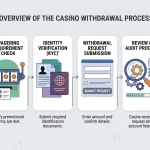
The same caution applies to a site’s account and identity procedures. Offshore operators may ask for documents before releasing a withdrawal. Check the site’s stated requirements before depositing, and be prepared to provide identity and address proof before your first withdrawal if you proceed. Verification is not a guarantee that a withdrawal will be approved; it is a condition that may become relevant when you try to access your balance.
Self-exclusion tools also have limits across borders. BetStop applies to Australian-licensed operators; it does not bind offshore sites. Since there are no Australian-licensed online casinos, registering with BetStop should not be treated as a way to block access to offshore casino accounts. If you are trying to stop gambling, relying on a national register alone may leave a gap where offshore services are concerned.
The phrase “legal to play” therefore needs careful handling. It describes the position of the individual under the law, not the status of the casino, the fairness of its games, or the likelihood of receiving a payout. An offshore site may be accessible and still sit beyond the protections a player might expect from a locally licensed service. Access is not oversight; an account is not a safeguard.
No Legal Recourse
If an offshore casino refuses to release your winnings, you have no legal recourse in Australia to recover that unpaid balance.
For anyone considering real-money online keno, the uncomfortable point is that the player’s legal position and financial protection are separate questions. The law’s focus on operators does not transfer the operator’s obligations to an Australian regulator, and it does not give a player an Australian route to recover winnings that an offshore casino withholds. That is a material risk, even where playing itself does not expose the individual to a penalty.
Checking a Site Without Mistaking Payments for Proof
A payment logo can tell you how a site says it accepts money. It cannot establish who operates the site, whether its claims about games are accurate, or what protection you would have if something goes wrong. That distinction matters when comparing sites that advertise keno alongside other casino games: a familiar payment method is not a substitute for evidence about the business behind the offer.
PayID is an alias service built on Australia’s New Payments Platform (NPP). It lets a person send a transfer using an email address, mobile number or Australian Business Number rather than entering account details. The NPP is supported by all major banks and uses end-to-end encryption. Those features describe the payment infrastructure. They do not verify a casino’s status, establish that a game is fair, or confirm that its published return-to-player (RTP) information is complete and accurate.
RTP is a game’s stated return percentage over play, not a promise about what an individual player will receive. Even a site that displays an RTP figure should be judged on what supports that figure and whether the claim is clearly tied to the specific game and configuration. PayID cannot answer those questions. Nor does a successful transfer certify that the site’s other statements are reliable.
Live Dealer Casinos Online in Australia: What to Know
A careful review starts by separating claims into categories. Payment claims concern how funds are sent or received. Game claims concern what is offered and how it works. Business and legal claims concern the operator and the conditions under which it serves customers. Evidence for one category should not be allowed to stand in for evidence for another. A deposit method, for instance, is not proof of a particular keno variant or a live game being available.
Read the terms as well as the promotional copy. Look for clear explanations of deposits, withdrawals, identity checks, account restrictions and complaint handling. If a claim is important to your decision, see whether the site states it in a formal policy and whether the wording is specific. Vague assurances such as “secure” or “trusted” do not explain what happens when a payment is delayed or disputed. A polished page is easy to produce; clear, accountable terms are more useful.
Treat claims about independent testing, licensing, game fairness or RTP as claims that need separate support. A logo or certificate image, by itself, does not show what was tested, when it was tested, or whether the result applies to the games being advertised. Read the linked material rather than relying on a badge or a short summary. If the site does not explain the basis for a claim, do not fill that gap with assumptions drawn from its payment options.
Do
- Read formal policies for deposits and withdrawals
- Verify identity and address requirements
- Check linked material for testing certificates
Don’t
- Mistake payment logos for proof of legitimacy
- Rely on vague terms like “secure” or “trusted”
- Assume a deposit method proves game fairness
PayID transfers can also be blocked. A specialist review has reported that some Australian banks, including some of the major banks, occasionally stop PayID payments to gambling merchants they recognise. That report should not be read as a guarantee that a transfer will work, or that every bank applies the same approach at all times. A declined transfer is a payment decision; it does not tell you whether a site’s claims are true.
The same caution applies when a site presents several ways to pay or promotes a particular method as fast or convenient. The presence of PayID does not prove that a site will process a withdrawal promptly, and the NPP’s encryption does not resolve questions about an offshore operator’s conduct. Payment infrastructure and the operator’s obligations are different things.
For a site presenting keno among its casino offerings, use a simple rule: judge each assertion on the evidence relevant to that assertion. Payment details can explain the route money takes. They cannot, on their own, establish the identity or standing of the operator, the fairness of a game, or the transparency of its RTP.
Keno Games: What This Guide Can Verify
A keno game cannot be judged from its name alone. To compare one version with another, you would need its rules, the way its variants differ, the odds attached to possible outcomes and the identity of the provider. Without those details, there is no sound basis for naming a particular keno game as better, or recommending one over another. A confident ranking without comparable information would be guesswork dressed as guidance.
That matters because “keno” is not enough information to tell you what a game involves. A label does not explain how a round works, what choices are available, how outcomes are determined or what the chances of winning are. Nor does the appearance of a keno game in an app establish those details. The same caution applies whether you are looking at a single game or a collection presented as online casino keno.
Pokies in Perth: Venue Hours, Access and Rules
Before relying on a game description, look for rules that explain the round from beginning to end. The odds should be clear enough for you to understand what they refer to, rather than presented as a headline number without context. If the rules and odds are difficult to locate or do not answer basic questions about how the game works, you cannot make a meaningful comparison. Do not treat polished graphics, a familiar name or a long game catalogue as a substitute for those details.
Provider information is another separate question. A game’s title and presentation do not, by themselves, identify who made it. If a provider is named, that still does not tell you the game’s rules or odds; each claim needs to be considered on its own. The point is not to assemble a list of brands, but to avoid assuming that a label proves something it does not.
This is a narrow limit on what can responsibly be said about keno games, not a statement that every game has identical rules or outcomes. It means that no specific version can be compared or endorsed without dependable, game-level information. If a site does not make the rules and odds understandable, you have no good reason to fill the gaps with assumptions.
The general safeguards around gambling are a different matter. In Australia, the legal age for gambling, including online pokies, is 18. That age rule does not explain how a keno game works, and it does not make a particular game suitable for you. Age eligibility and the information needed to assess a game are separate issues.
Responsible-gambling tools can help you set boundaries around gambling activity. These include deposit limits, which restrict what you put in; loss limits, which set a ceiling on losses; and session time limits, which help control how long you spend gambling. Self-exclusion is another option: it allows you to block your own access to gambling services. These tools do not improve a game’s odds or turn unclear rules into clear ones. They are safeguards for managing participation, not evidence about the game itself.
If you are considering keno, separate the questions. First, can you understand the rules, variants and odds for the specific game? Second, can you identify who provides it? Then consider whether you can set limits that make sense for you. When the first questions cannot be answered from the information shown, a recommendation would have no dependable foundation. A game title, app listing or broad promise of choice cannot supply the missing explanation.
Keno and “Slot Machine” Searches Are Not Interchangeable
Keno and pokies are different labels, even when a site or a player uses them together. Calling a keno product a “slot machine” does not establish what the product actually is, how it works, or whether it is available to Australian players. The wording may reflect loose terminology rather than a meaningful description of a game.
That distinction matters because a label can blur both the product and the rules that apply to it. A page that groups keno with pokies is not, by that fact alone, showing that the games share the same format or legal status. Nor does a familiar term make an online offering legitimate. You need to distinguish what a product is called from what is being offered and to whom.
For real-money online play, the Australian legal boundary is clear. The Interactive Gambling Act 2001 makes it illegal for companies to provide online casino-style games, including pokies, to people physically located in Australia. No domestic licences have been issued for real-money online pokies. A page that describes an online product as a keno-style machine does not create an exception to that rule.
This is a point about terminology, not a recommendation to try one type of game over another. The phrase “keno slot machine” cannot, on its own, tell you whether a site is offering keno, pokies, or some combination of labels. It also cannot establish that an offering is lawful for Australians. Marketing language is not a substitute for understanding the product, and it does not alter the legal position.
If you encounter the terms used interchangeably, treat that as a reason to read the description carefully rather than assume they mean the same thing. In particular, do not infer that a game is permitted simply because it is presented under a keno label instead of a pokies label. The relevant question is not which phrase appears on a button or page title; it is whether the service amounts to prohibited real-money online gambling for people in Australia.
Attention: Using a keno label does not make a real-money online gambling service lawful for people in Australia.
Keeping the terms separate avoids a false sense of clarity. A label may be imprecise, but the legal boundary around real-money online pokies is not: companies cannot lawfully offer them to people in Australia without a domestic licence, and that licence does not exist.
Free-Play Searches: What They Do Not Establish
A reference to free play does not, by itself, show that a particular keno game is available, that it can be played without depositing money, or that any offer is open to Australian residents. Those are separate claims, and a label alone cannot settle them. The same applies when keno is described alongside slot terminology: combining the words does not establish that a specific product exists or explain what its play conditions are.
There is also an important distinction between a free-play label and the status of the online casino offering it. Australia has no Australian-licensed online casino. Calling an activity free does not create a local casino licence or change that broader position. Nor does the label tell you whether a service is genuinely limited to non-cash play or is connected to a real-money account.
For you as a reader, the practical point is to treat “free” as a description that needs context, not as proof of a no-cost experience. The term may be used to refer to different arrangements, but without clear terms you cannot infer what participation involves, whether a deposit is needed, or what happens to any balance or winnings. Do not assume that the word means there are no conditions.
Keno and slot terminology should not be treated as interchangeable simply because both appear in the same description. A phrase linking keno with free slot play does not establish the game rules, the format, or the presence of a particular title. It also does not tell you whether an offer is current or available to someone in Australia. Those details matter more than the shorthand used to attract attention.
This is a narrow point, not a claim that every use of “free” means the same thing. It means the label alone is too thin to support conclusions about a product or its terms. A free-play description does not establish a verified keno option, and it does not alter the fact that there is no Australian-licensed online casino. Keep those questions separate: what the wording appears to promise, what the conditions actually say, and what the market’s licensing position is.
Strategy and Software Claims Need Evidence
A claim that a keno strategy improves results needs more than a confident explanation or a sequence of numbers to choose. It needs evidence that the method changes the outcome, rather than simply describing how someone prefers to play. Without that distinction, advice can make chance sound controllable.
The same caution applies to claims about casino software. A provider name, polished interface or technical-sounding description does not, by itself, show how a particular keno game works or establish its odds. Before relying on a software claim, look for clear, game-specific information explaining the rules and how results are generated. If that information is absent or vague, treat the claim as unsubstantiated rather than filling in the gaps with assumptions.
In Australia, the legal gambling age is 18, and tools like deposit limits and self-exclusion are available to help manage gambling activity.
For pokies, each spin is generated as a separate random event by a Random Number Generator (RNG). That means a previous result does not determine the next one. A run of wins or losses is not evidence that a particular sequence is due to change, and a betting pattern cannot make an independent result predictable. This is a limit on what strategy advice can promise, not a suggestion about which games to play.
Keno strategy and software claims should also be kept distinct. A description of software does not prove that a betting method works; a proposed method does not identify or validate the software behind a game. If a page blends these claims together, ask what evidence supports each one. Statements about “systems”, settings or algorithms are not substitutes for published rules and transparent explanations.
Terms such as “keno slot” can blur different ideas. A label alone does not establish that a product is a keno game, a pokie, or a particular combination of the two. The name should not be treated as proof of its mechanics. Nor should general advice about chance be recast as a strategy for a specific product.
In Australia, the legal age for gambling is 18. Deposit, loss and session-time limits, along with self-exclusion, are tools for reducing harm; they do not make outcomes predictable. BetStop applies to Australian-licensed operators and does not bind offshore sites. A strategy page that omits these practical limits while promising control deserves particular caution.
Canada and Four-Card Keno: Keep the Markets Separate
A Canadian casino offering keno, or a game described as four-card keno, belongs to a different market from one intended for Australian players. A name or description found in Canadian material does not establish that the same operator, game, rules or payment conditions apply in Australia. The distinction matters: a familiar label is not evidence that two products are identical.
The same caution applies to multi-card formats. “Four-card” may sound like a clear description, but the label alone does not tell you how a game works, what outcomes it pays or whether it is available to Australian players. Without dependable details about a particular game, claims about its rules or suitability would be guesswork. A Canadian listing cannot fill that gap.
If you are comparing information across countries, check what jurisdiction the material actually concerns before treating it as relevant to you. Operator terms, game descriptions and payment arrangements should not be carried over from one market to another by assumption. This is especially important when a page uses a broad label such as “online keno” without making clear which country its information covers.
Payment costs also deserve attention. A specialist gambling review has reported that a bank or card issuer may classify a gambling deposit made by credit or debit card as a cash advance. In that case, the transaction could attract a fee of 3–5% and interest from the time it is processed. The treatment depends on the institution and the card, so the possibility is not a promise that every gambling transaction will be charged this way. Check your card terms or ask the issuer how it handles the transaction before paying.
Those costs are separate from a game’s rules or a site’s description of its keno options. A payment method does not establish which country a service is meant for, what a particular game offers or whether its terms are suitable for you. Keep the country, game details and payment conditions distinct rather than treating a Canadian reference as an Australian answer.
Instant Payout Casinos in Australia: What to Know
Offshore Casino Access and Site Blocking
A site offering online keno to people in Australia may be offshore, but its location does not place it outside the Australian enforcement framework. The Australian Communications and Media Authority (ACMA) is the domestic regulator responsible for enforcing the Interactive Gambling Act 2001. Under that framework, ACMA blocks access to illegal offshore gambling sites.
The mechanism is an ISP blocklist: internet service providers are required to comply with ACMA’s list of sites. This is an enforcement measure, not a certification system. A page loading—or failing to load—does not establish that a casino is lawful, safe, or trustworthy. Nor does a site’s claim that it offers keno for Australians alter the legal position of the service.
For someone looking for an online keno casino, the practical point is that access can be restricted as part of enforcement. ACMA’s blocklist is directed at illegal offshore gambling sites; it is not a directory of approved operators, and inclusion or omission should not be treated as a quality rating. The regulator’s role is to enforce the law, not to help users find a substitute site when one becomes inaccessible.
That distinction matters when a search for casino keno leads to a page that appears available. Availability is not approval. A site may present itself as an Australian option while operating offshore, but that presentation does not make it an Australian-licensed casino. There is no domestic licence for online casinos.
If you encounter a site that has been blocked, avoid treating the block as a prompt to seek another route to the same service. It reflects an enforcement action, not a temporary technical inconvenience. ACMA’s role and the ISP blocklist are part of the Australian response to illegal offshore gambling, so an accessible page should not be mistaken for a lawful or endorsed one.
Bonuses, Bitcoin Searches and the Cost of Turnover
A casino bonus can look larger than its practical value once you account for the wagering requirement: the amount you must bet before you can withdraw bonus-related winnings. The multiplier may apply to the bonus alone or to the deposit and bonus combined, so the calculation matters.
A specialist gambling review uses a $500 bonus with a 40× requirement to illustrate the scale: you would need to place $20,000 in bets before withdrawing any winnings. If the requirement applies to a $500 deposit plus a $500 bonus at 35×, the turnover rises to $35,000. These are examples, not offers to seek out. A specialist review describes requirements above 40× as punishing and advises looking for 35× or lower; that is the review’s assessment, not a guarantee that a bonus is worthwhile or that its terms are fair.
Before accepting any offer, read the full conditions and establish what the multiplier applies to, which games count towards it, and whether there are withdrawal restrictions. A large headline figure does not remove the cost or uncertainty of meeting the terms.
Free-spin promotions can have a separate catch: a cap may limit how much of the resulting winnings you can cash out. Check for that condition as well as any turnover requirement; otherwise, a displayed win may not be withdrawable in full.
Bitcoin is another payment term people may encounter when looking at casino offers. Its mention alone does not establish that a particular casino accepts it. Do not treat a Bitcoin reference in promotional material as proof of payment availability, nor as evidence about the operator or the terms attached to a bonus.
How do I know if an online casino is safe to play at?
There is no Australian-licensed online casino. Offshore casinos are not protected by Australian licensing, and you have no legal recourse in Australia if one refuses to pay your winnings.
What is the best payment method for fast withdrawals in Australia?
E-wallets such as Skrill and Neteller are popular for their speed. Banks and card companies may block transactions to known gambling sites.
Do PayID deposits qualify for bonuses?
Yes, when PayID is a qualifying deposit method, it is treated like other qualifying methods for bonuses.
Pokies Regions

Australian online pokies: real-money play explained
A practical look at Australian legal limits, bonus turnover, payment methods and why access to...

Aussie online casinos: legality, payments and checks
The guide explains the legal position, site checks, bonus terms, payment risks and limits involved...

Aussie Online Pokies: Free Play, Claims and Risks
A practical guide to interpreting free-play sessions and evaluating claims, payments and terms around online...

Australian Online Pokies: Legal and Safety Guide
A practical guide to Australian legal limits, payment checks, bonus terms, free-play rules and the...

Casino in Adelaide: Hotel, Dining and Visitor Guide
A practical guide to hotel booking checks, casino facilities, food options and details to confirm...

Casino in Brisbane: What to Verify Before Booking
A casino label alone does not confirm a venue or hotel connection, so verify the...

Best Casino in Canberra: What Can Be Verified
A practical look at what can—and cannot—be established about Canberra casino stays, gaming, dining and...

Casino in Darwin: Venue Details and Visit Checks
A local casino listing and an online gambling page answer different questions, while venue details...

Hobart Casino: Poker, Stays and Visitor Information
An overview of questions about gaming, accommodation, food and facilities, with a reminder to verify...

Casino Hotels in Melbourne: Rooms and Booking Deals
Room labels and casino links can leave important details unclear, so check the property, room...

Best Casino in Perth: Hotel, Dining and Visit Guide
A practical guide to checking hotel arrangements, comparing accommodation and planning dining and other aspects...

Queensland Casino Stays: Hotels, Dining and Practical Tips
A practical guide to accommodation, dining, facilities and venue details for a visit to a...

Sydney Casino Guide: What to Verify Before Booking
Casino visits and hotel stays involve separate choices, so verify the property, room offer and...

Casino Hotels in Tasmania: Stay and Booking Guide
A casino hotel listing can mean different things, so verify the property’s connection to a...

Victoria Casinos: Online Laws, Hotels and Venue Details
Victoria’s casino landscape spans online-game rules and practical checks for hotels, dining, access and venue...

Western Australia Casino Stays and Hotel Details
Casino-linked accommodation can mean a connected hotel, a same-group property or a nearby stay, so...

Fast payout online casinos in Australia: what to check
A payout estimate may cover only the operator’s review and release, while the payment route...

Instant Payout Casinos in Australia: What to Know
A clear look at withdrawal stages, verification and payment processing helps distinguish a fast approval...

Live Dealer Casinos Online in Australia: What to Know
Live dealer games sit within Australia's online gambling restrictions, while offshore licensing offers no local...

Live casino online in Australia: access and protections
A practical look at offshore live casinos, what their software can verify, and the legal...

Online Pokies for Real Money in Australia: Legal Guide
Explains the legal distinction between players and offshore operators, and how payment methods, bonuses and...

Best pokies in Adelaide: how to check venues
Venue hours and map listings may not confirm whether the gaming area is operating, so...

Best Pokies in Brisbane: Online Play and Venue Checks
Rankings, game features and venue availability are different measures, while RTP describes long-run returns rather...

Best pokies in Canberra: hours and venue checks
Online listings can be outdated, and a venue’s general business hours do not confirm that...

Best Pokies in Geelong: Hours, Venues and Rules
A practical guide to checking gaming-area hours, local venue details, machine rules and payment questions....

Best Pokies in Melbourne: What to Check Before Playing
Learn what to check about venue locations and game information, and why RTP and previous...

Best pokies in New South Wales: what to verify
A practical guide to checking venue details and understanding what machine counts, game information and...

Pokies in Perth: Venue Hours, Access and Rules
A practical guide to confirming access, interpreting payout claims and checking the local and online...

Best pokies in South Australia: what can be checked
A practical guide to interpreting RTP, checking venue information and understanding the limits of location-based...

Best Pokies in Sydney: Venue and Opening-Time Checks
A practical guide to local venue searches, opening-time checks, online limits and safer-play considerations across...

Best Pokies in Tasmania: Hours, Records and Rules
Venue opening times do not necessarily confirm that gaming machines are operating; the guide also...

Best RTP Pokies in Australia: Understanding RTP
RTP describes theoretical returns across extensive play; it does not predict an individual session or...

Big Red Pokies Online in Australia: Free Play Guide
A clear look at free play, demo limits, legal considerations and what can be verified...

Most Trusted Online Casino in Australia? What to Know
Australian licensing status, payment methods, bonus terms and withdrawal risks all shape what casino trust...

Pokies open near me in Australia: casino hours
Major Australian casinos operate 24 hours, but nearby gaming venues and holiday access can follow...

Pokies Parlour Casino in Australia: Meaning & Checks
The phrase may describe gaming machines or a search for casino information, but it does...