Instant PayID Withdrawals in Australia: How They Work
 Available in AU

PayID can move approved funds in real time, while casino checks, first withdrawals, limits and bonus conditions shape the total wait.
Table of Contents
- When a PayID Withdrawal Is Actually Instant
- What Fast PayID Payout Times Look Like in Practice
- Checking PayID Withdrawal Limits Before You Deposit
- Why Your First PayID Cashout Can Take Longer
- PayID Alongside the Other Ways Casinos Handle Payments
- Why E-Wallets Can Beat a Standard Bank Transfer
- PayID Transfers Versus Traditional Bank Transfers
- How PayID Fits Among Payment Methods Used in Australia
- Bonus Rules and Cashout Limits for PayID Pokies
- What Affects a PayID Pokies Withdrawal
- Payments
When a PayID Withdrawal Is Actually Instant
“Instant” describes the transfer stage, not necessarily the full wait from submitting a withdrawal request to seeing the money in your account. PayID is Australia’s bank-to-bank payment system, operating through the New Payments Platform (NPP). Transfers sent through PayID use the Osko network, which processes payments in real time. That infrastructure can move funds quickly once a payment has been released, but it does not decide when a gambling operator approves a withdrawal.
The distinction is between two separate events. First, an operator receives and reviews your request. Then, if it approves the payment, it sends the funds through the payment system. The second stage is where PayID’s real-time capability matters. A transfer may arrive quickly after release; the time spent waiting for approval is separate and can make the overall experience longer.
This is why a claim of an “instant PayID withdrawal” needs to be read carefully. It may refer only to the movement of money after approval, while leaving the operator’s review time unstated. A specialist review reported that some sites promoted instant withdrawals even though internal checks delayed payment for as long as 24 hours. That is an account of particular sites, not a reliable timetable for every operator. The word “instant” on its own does not tell you when the clock starts.
If you’re choosing a casino for PayID withdrawals in Australia in 2026, check the stated payout method and timing carefully: the information available for these operators varies. Use the details below to see what is actually specified before you decide.
1. LuckyVibe
License: Curacao Gaming Control Board OGL/2023/176/0095 (Hollycorn N.V.) LuckyVibe is listed with a Curacao Gaming Control Board licence, OGL/2023/176/0095, held by Hollycorn N.V.
2. Golden Pokies
License: Curacao Golden Pokies is listed with a Curacao licence.
3. Vegaz Casino
License: Curacao OGL/2024/1335/0780 · Min. deposit: EUR 20 Vegaz Casino is listed with Curacao licence OGL/2024/1335/0780 and a minimum deposit of EUR 20.
4. Bizzo Casino
License: Curacao Gaming Control Board (TechSolutions Group N.V.) Bizzo Casino is listed with a Curacao Gaming Control Board licence, with TechSolutions Group N.V. named.
5. DragonSlots Casino
License: Curacao Gaming Authority (Jumpman Gaming Ltd) DragonSlots Casino is listed with a Curacao Gaming Authority licence, with Jumpman Gaming Ltd named.
6. Kingmaker
Payout speed: crypto ~90 minutes, fiat 1-5 days · Min. deposit: A$30 Kingmaker lists crypto payouts at around 90 minutes and fiat payouts at 1–5 days; its minimum deposit is A$30.
7. Uptown Pokies
License: Curacao (operating since 2017) · Min. deposit: A$20 Uptown Pokies is listed as Curacao-licensed and operating since 2017, with a minimum deposit of A$20.
8. GoldenCrown
License: Curacao Gaming Control Board OGL/2023/176/0095 (Hollycorn N.V.) GoldenCrown is listed with a Curacao Gaming Control Board licence, OGL/2023/176/0095, held by Hollycorn N.V.
9. Wild Tokyo
License: Curacao · Payout speed: crypto 30-60 minutes, fiat 1-5 days · Min. deposit: A$10 Wild Tokyo lists crypto payouts at 30–60 minutes and fiat payouts at 1–5 days; its minimum deposit is A$10.
10. Ricky Casino
Payout speed: crypto under 1 hour, PayID 1-3 business days · Min. deposit: A$20 (A$30 to qualify for the bonus) Ricky Casino lists crypto payouts under an hour and PayID payouts at 1–3 business days. The minimum deposit is A$20, or A$30 to qualify for the bonus.
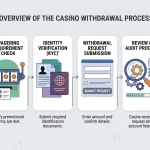
A withdrawal request may involve checks before any transfer is sent. Operators require identity verification before processing withdrawals, and they may review account details or the request itself. If the operator has not completed its checks, the payment has not yet reached the PayID transfer stage. The payment network cannot speed up a decision that has not been made.
There is also a difference between a payment being sent and your bank displaying it. PayID and Osko are designed for real-time transfers between bank accounts, but your result still depends on the payment being released correctly and on the receiving account being suitable for the transfer. If information needs correcting or a payment cannot be completed as entered, the apparent wait is no longer just a question of network speed.
If an operator’s process asks you to enter a PayID identifier, amount and confirmation, take care that the details match the account linked to your profile. Use the same PayID details used for deposits, and withdraw only to an account linked to your casino profile. A mismatch can prompt further security review rather than a direct payment. A fast transfer rail does not make account checks optional.
The practical way to interpret a timing claim is to look for separate explanations of approval and transfer. Does the stated time begin when you submit the request, or only when the operator approves and releases it? Does the operator describe checks that can hold up approval? If those stages are not distinguished, a short transfer time may give an incomplete picture of how long you will wait from request to receipt.
PayID pokies in Australia: payments and checks
PayID’s speed is therefore real but conditional: it applies to the payment after release, not to every step leading up to release. A withdrawal request is not itself a bank transfer. The operator must first complete the required process and approve it; only then can the NPP and Osko carry the payment. Treating those stages as one creates the impression that a request will be paid immediately, which the payment method cannot guarantee.
There is a separate legal issue for people in Australia. The Interactive Gambling Act 2001 prohibits operators from providing real-money online casino games, including slots, to people physically located in the country. Describing how a payment system works does not make those services lawful or endorse using them. The technical meaning remains narrow: PayID can transfer funds in real time once a payment is sent, while the time before that point depends on the operator’s handling of the request.
What Fast PayID Payout Times Look Like in Practice
Reported PayID payout figures can sound remarkably short, but they describe particular observations, not a time you can count on for every withdrawal. A specialist review reported average processing times between 30 and 90 seconds for the options it assessed. That range is useful as a record of what was observed; it is not a service standard or a promise that a request will be completed within that window.
Fastpay Casino
Recorded average processing time of 47 seconds.
PlayAmo
Recorded average processing time of 68 seconds.
National Casino
Recorded average processing time of 3.2 minutes, attributed to first-withdrawal security checks.
The same review gave individual averages for three named operators: Fastpay Casino was recorded at 47 seconds, PlayAmo at 68 seconds and National Casino at 3.2 minutes. The review attributed the longer National Casino figure to security checks on first withdrawals. These results are specific to the review’s assessment and should not be read as a current league table or a guarantee of future performance. Averages also smooth out variation: they do not tell you that every payment in the sample arrived at precisely that time.
Another specialist review described withdrawals at some leading Australian PayID casinos as taking under five minutes. It contrasted those observations with one to three business days for standard bank transfers. That comparison is also a report from a particular assessment, rather than a universal description of what each operator or bank will do. Results can change as operator procedures and payment arrangements change.
An individual payout can be faster or slower than a reported average. A very short recorded time shows that a payment completed quickly in the circumstances measured; it does not establish how long another request will take. Similarly, a result measured in minutes does not mean the transfer itself was slow: the figure may reflect the full recorded handling time, including steps that differ between requests. The figures above are best treated as snapshots, not a stopwatch you can start when submitting a cashout.
When comparing reported timings, keep the distinction between a single result, an average and a broad claim in view. A specific result such as 47 seconds is one operator’s reported average in one review; the 30–90-second range summarises that review’s assessed options; and “under five minutes” is a wider description from another review. None tells you what will happen with your own request. That is the practical limit of timing claims: they can indicate what has been observed, but they cannot turn a past result into a personal deadline.
Checking PayID Withdrawal Limits Before You Deposit
A withdrawal limit is not just a ceiling on how much you can request. It can determine whether you need to split a cashout, how much can be paid in one transaction and whether the request falls within the operator’s automatic approval rules. Before relying on a PayID option, look for its minimum and maximum withdrawal amounts and the conditions attached to each.
A specialist review reports that some leading PayID casinos automatically approve withdrawals below $5,000 AUD. Treat that as a description of the operators covered by that review, not a standard that applies across the market. Automatic approval also does not mean the funds are guaranteed to arrive immediately: it describes an approval step, and the operator’s terms remain decisive.
There is an important qualification for larger requests. The applicable market requirements call for casinos to disclose any manual review process for withdrawals exceeding $2,000. So a published automatic-approval threshold should not be read as removing the possibility of manual review above that amount. Check how the operator explains the interaction between its threshold and its review policy, rather than relying on a single headline figure.
Market requirements call for casinos to disclose any manual review process for withdrawals that exceed $2,000.
Minimums matter as well. If your available balance is below the stated minimum, you may not be able to submit a withdrawal for that amount. A maximum per transaction can also mean that a larger balance must be paid in separate requests, subject to the operator’s policy. The terms should make clear whether those limits apply to each request or whether a separate weekly or monthly cap also applies.
A specialist review says reputable PayID casinos publish minimum and maximum withdrawal limits clearly. Use that as a practical check: if the figures or approval conditions are difficult to find, you cannot sensibly judge how the rules will affect a cashout. Look in the payment terms and withdrawal section, and check whether the stated limits apply specifically to PayID rather than to another payment route.
The terms should also disclose fees and processing conditions, not just the permitted amount. Read the wording around automatic approval carefully: it should identify what qualifies, what may be sent for manual review and whether the threshold changes with the requested amount. If the policy is unclear, ask the operator for a written explanation before depositing. A threshold that sounds generous is of little use if the conditions governing it are left vague.
Why Your First PayID Cashout Can Take Longer
A PayID transfer can move quickly once released, but that does not mean a withdrawal request is paid straight away. Before sending funds, the operator may need to confirm who you are and check that the request matches the account and payment details on file. The first cashout can therefore involve a review that later requests may not need.
Identity checks are a common point of delay. A specialist review notes that first withdrawals can prompt requests for verification, such as documents to establish the account holder’s identity. For real-money casino services, identity verification must be completed before a withdrawal is processed. If the requested information is missing, unclear or inconsistent with your account details, the operator may need to resolve that before releasing funds.
No-verification casino withdrawals in Australia
If verification is requested, follow the operator’s instructions and provide only the documents it asks for through its stated secure process. Check that the account details are accurate and that the PayID used for a withdrawal matches the details used for deposits. A mismatch can prompt further security checks. Funds should be sent only to an account linked to your casino profile.
Completing identity checks early can significantly speed up future withdrawals. It does not guarantee that every later request will be approved without review, but it can remove one avoidable step when you decide to cash out. If a service allows verification before a withdrawal request, completing it in advance may help prevent the first cashout from becoming the moment when documents are gathered and checked.
The amount requested can also matter. A specialist review identifies withdrawals above $2,000 as a possible trigger for delay. Casino terms should disclose manual review for withdrawals exceeding that amount; a large request may need additional assessment before release. This is separate from the transfer itself: even if the payment rail can move funds in real time, an outstanding review can hold up the start of that payment phase.
Do
- Complete identity verification early
- Match withdrawal PayID with deposit details
- Use accounts linked to your profile
Don’t
- Wait until the first cashout to verify identity
- Use PayID identifiers that differ from deposits
- Request amounts exceeding transaction limits
A request may also be checked if its details do not fit the account history or the operator’s stated procedures. A specialist review lists first-time identity checks, larger withdrawals and bank processing windows among possible sources of delay. These are reported triggers, not a promise that every request will encounter them or that a particular review will take a set time. Check the applicable withdrawal terms and contact the operator if a request remains pending.
The distinction matters when assessing an advertised instant withdrawal. “Instant” can describe the payment after approval, not the full interval from submitting a request to receiving money. In Australia, real-money online casino games are prohibited services under the Interactive Gambling Act 2001; information about payment mechanics does not make such a service lawful to provide.
PayID Alongside the Other Ways Casinos Handle Payments
Payment options are not interchangeable simply because they appear on the same cashier page. PayID is one route, while e-wallets, bank transfers and, in some cases, cryptocurrency are separate methods with their own account and processing requirements. A specialist review of payment options for Australian players describes PayPal and Skrill among the e-wallets, alongside debit cards and bank transfers; it also notes that some services list cryptocurrency. Availability can differ between operators, and a method offered for deposits may not be available for cashouts.
Credit cards should not be treated as an available way to fund online casino gambling in Australia. The Interactive Gambling Act 2001 prohibits operators from providing real-money online casino games to people in the country. That legal context matters when you encounter payment descriptions aimed at Australian users: a payment logo or a claim of local availability does not make the underlying service lawful.
For withdrawals, the method used to deposit can determine which route is available. Operators generally require funds to be returned to the original deposit method where possible. This is intended to keep the movement of money tied to the account that supplied it, rather than allowing a cashout to be redirected freely. If you deposit through one method and later select another for a withdrawal, the operator may require you to use the original route or complete additional checks.
PayID therefore does not automatically replace every other payment option. It may be relevant when it is offered for both deposits and withdrawals, but the cashier’s payment menu and the applicable terms determine what can be used. A deposit option alone is not proof that the same method can receive a payout. Before sending funds, check whether the method is supported for withdrawals and whether the account details match those attached to your profile.
The same distinction applies to e-wallets and bank transfers. A casino may accept a method for incoming funds but handle outgoing payments differently, including by returning money to the deposit source where that is possible. Cryptocurrency availability is also operator-specific; its presence in a payment list does not establish that it can be used for every transaction.
Legal Warning
The Interactive Gambling Act 2001 prohibits operators from providing real-money online casino games to people physically located in Australia.
Keep the payment route and account ownership consistent, and read the withdrawal terms before making a deposit. The relevant details are whether the method works in both directions, what account information is required and whether the operator directs cashouts back to the original source. That is a more useful comparison than treating every payment logo as an equally available way to deposit and withdraw.
Why E-Wallets Can Beat a Standard Bank Transfer
An e-wallet can shorten the payment leg of a withdrawal compared with a bank transfer, but the method alone does not determine when money reaches you. A real-money platform may need to review and approve a request before sending it. The time shown for the transfer method should therefore not be read as the time from clicking “withdraw” to receiving funds.
Timing figures vary by source. One specialist review described e-wallet transactions as being completed within hours rather than days. Other payment information puts e-wallet withdrawals within a 24-hour processing window, while bank transfers and card payments can take several days. These are reported timeframes, not a promise for any individual transaction; the operator’s handling and the receiving provider can affect the result.
Quick Withdrawal Casinos in Australia: How Cashouts Work
The distinction matters when comparing an e-wallet with a standard bank transfer. If a platform approves both requests at the same point, an e-wallet may deliver funds sooner under the reported timings. But if a request is awaiting review, selecting an e-wallet does not make that review disappear. A payment method can be quick after release and still be part of a longer overall wait.
There is also a practical difference in where the funds arrive. An e-wallet withdrawal is sent to an account with that provider, while a bank transfer goes to a bank account. That may affect how readily you can use the money, but it does not change the stated processing windows. Check that the account details are correct and that the destination is permitted by the platform’s payment rules before requesting a transfer.
When comparing timings, look for separate descriptions of approval and delivery. “Processed” may refer to the platform authorising a withdrawal, or to the provider completing the transfer; those are not necessarily the same event. A clear explanation should say which stage a quoted timeframe covers. If it does not, the number offers less certainty than it appears to.
There is an important legal context for Australian readers: the Interactive Gambling Act 2001 makes it illegal for operators to provide real-money online casino games to people physically in Australia. This comparison describes payment timing in general terms; it is not an invitation to use an offshore casino service. A fast payment route does not alter the law or turn a platform’s withdrawal claim into a guarantee.
If you are reading a withdrawal policy, focus on the stated method and what its timing measures. An e-wallet may be faster than a bank transfer after approval, but neither label settles how long the full request will take.
PayID Transfers Versus Traditional Bank Transfers
PayID and a traditional bank transfer can both move money between bank accounts, but they use different payment routes. PayID operates through Australia’s New Payments Platform, with Osko supporting real-time transfers. A standard bank transfer may take longer to complete, so the time shown as a withdrawal-processing estimate can depend on which route is used.
That distinction matters when comparing an instant withdrawal through PayID with a bank payout. Filmink.com.au has reported that PayID withdrawals can be processed almost instantly, while traditional bank transfers may take several working days. A separate specialist review gives a longer possible timeframe for a bank transfer: as many as five business days. These are reported timings, not a promise about what will happen with any particular transaction.
The bank route can involve waiting for the transfer to be completed after it has been initiated. PayID’s real-time capability can shorten that payment stage once funds are sent. But a quick transfer rail does not mean a withdrawal request is approved and paid at once. Any operator-side handling happens before the payment is released, so the total wait from request to receipt may be longer than the transfer itself.
Fees also deserve attention. Filmink.com.au has noted that a transaction fee may apply when withdrawing through PayID. Whether a fee is charged, and how it is calculated, depends on the applicable terms. Check the payment conditions before relying on a displayed payout time; a faster route is not necessarily the cheaper one.
When reading a stated processing time, separate three things: the time taken to review a request, the time taken to send the payment, and the time taken for the receiving bank to show the funds. A comparison that describes only the payment stage can make PayID appear instant without explaining how long the complete process might take. For a bank transfer, the estimate may include a longer period before the funds are available.
There is also an important legal context. Under Australia’s Interactive Gambling Act 2001, operators may not provide real-money online casino games, including slots and table games, to people physically located in Australia. The payment comparison above is not an endorsement or a suggestion to use such a service. If you encounter a claim about an instant PayID cashout, treat it as a description of the transfer phase, not proof that a request will be approved or received immediately.
How PayID Fits Among Payment Methods Used in Australia
PayID is one of several payment routes described in reviews of offshore real-money platforms, but its role differs from that of a wallet, voucher or cryptocurrency. It is an identifier linked to a bank account, with transfers handled through Australia’s New Payments Platform and Osko. That makes it a bank-to-bank option rather than a separate stored-value account.
Payment options reported for offshore platforms serving Australian users include bank transfers and e-wallets such as PayPal and Skrill; some reviews also describe cryptocurrency. These reports concern offshore services, not a locally authorised casino market. Under the Interactive Gambling Act 2001, providing real-money online casino games to people in Australia is illegal. Payment availability should not be read as evidence that a service is lawful or locally approved.
Payment Method Differences
- PayID and instant banking are bank-connected routes
- E-wallets store funds in separate accounts
- Prepaid vouchers are generally for deposits only
- Cryptocurrency uses digital networks and varies in value
Instant banking services are another category. A specialist review has reported that some offshore real-money platforms have offered services through providers such as POLi. These services connect a payment to online banking, but they are not the same thing as PayID: the provider, steps and eligible transaction types can differ. The name “instant” also describes a payment function, not necessarily the time taken for an operator to process a request.
Cryptocurrency is distinct again. A specialist review has described some cryptocurrency transactions as near-instant, but that does not settle how quickly an offshore platform will credit or release funds. The currency, network and platform procedures all matter. Digital assets can also fluctuate in value, so the amount received may not remain equivalent to the amount sent.
Prepaid vouchers such as Neosurf have a different limitation. A specialist review reports that these are generally offered for deposits rather than withdrawals. A voucher can therefore fund an account without providing a route for cashing out. That difference is easy to miss if a payment page groups deposit and withdrawal methods together.
This is why a method’s appearance on a deposit screen does not establish that it can return funds to you. Operators may require money to go back to the same method used to deposit, where possible. If that route cannot receive a payout, the available withdrawal path may be different and subject to the operator’s rules. The PayID details used for a withdrawal should match those used for the deposit, and funds should go only to an account linked to the player profile.
The practical comparison is not simply “instant” against “slow”. PayID and instant banking are bank-connected routes; e-wallets hold funds in a separate account; vouchers are commonly deposit-only; and cryptocurrency uses digital networks. Before any transaction, the payment terms need to make clear which methods can be used in each direction, along with applicable fees and processing conditions.
Bonus Rules and Cashout Limits for PayID Pokies
A PayID transfer cannot make a balance withdrawable if the casino’s bonus conditions have not been met. When a promotion is attached to pokies play, check which funds are subject to wagering requirements: the bonus alone, or the bonus together with your deposit. The distinction can change how much play is required before any balance is available to cash out.
A specialist review of casino bonus terms describes bonus-only wagering as the more favourable arrangement for players. Under that structure, the deposit is not included in the wagering condition. If the requirement covers both deposit and bonus, more of the balance is tied to the promotion until the condition is satisfied. Read the promotion’s own rules before accepting it; the headline offer does not establish which calculation applies.
Until the wagering condition is complete, funds associated with the bonus may be restricted from withdrawal. A request made before that point may be declined, or the promotional balance may be handled according to the offer’s rules. Check whether the terms specify what happens to the bonus and any winnings if you withdraw early. If you do not want the conditions, look for whether the promotion can be declined before play begins; do not assume it can be removed later without affecting the balance.
Cashout limits are a separate issue. A per-transaction maximum describes the most that can be requested in one withdrawal. A weekly or monthly cap, by contrast, limits the total amount that can be paid out during that period. A specialist review notes that these broader caps may exist alongside individual transaction limits. That means a request can fit within the single-payment ceiling and still exceed the amount available under the period’s remaining allowance.
Under an Hour Casino Withdrawals in Australia
The practical effect is that a large balance may need to be withdrawn in more than one transaction, or across more than one period, depending on the operator’s rules. A limit on one request is not necessarily the same as a limit on the total cashout. Check both before relying on a displayed maximum, and look for any terms explaining how a pending request counts against the cap.
Keep the balance conditions and the payment method distinct. PayID concerns how funds are transferred after a withdrawal is approved; bonus wagering and cashout caps govern whether, and how much, you can request. An “instant withdrawal” label does not override either restriction. For a real-money platform, the relevant terms should set out the bonus conditions and withdrawal limits clearly, so you can see whether the balance is eligible and whether the requested amount fits the applicable caps.
What Affects a PayID Pokies Withdrawal
A PayID transfer can move money between bank accounts in real time through Australia’s New Payments Platform. That describes the payment rail, not the entire withdrawal. Before funds can travel, the operator has to receive, assess and approve your request. “Instant” therefore refers to the transfer after release; it is not a promise that a cashout will arrive immediately after you submit it.
Several steps can affect how long that approval takes. The operator must verify your identity before processing a withdrawal, and it may ask you for documents or clarification if account details do not match. A request made before verification is complete can remain pending while those checks are resolved. Completing identity checks early can reduce that obstacle on a later withdrawal, though it cannot guarantee a particular processing time.
The details entered for the payout matter too. Use the PayID linked to your casino profile and the same PayID details used for your deposit. A mismatch, an account that cannot be linked to you, or a change in payment details may lead to a security review rather than an automatic release. That review is separate from the speed of the bank transfer itself.
The amount requested can also affect the operator’s handling. Casino policy may set a maximum for each withdrawal, so a request above that limit may need to be changed or divided. A report by filmink.com.au also notes that withdrawal amounts can be restricted by operator policy. Separately, casinos must disclose manual review for withdrawals exceeding $2,000; if a request crosses that threshold, allow for the review step before expecting a PayID transfer.
Timing can depend on whether the request is complete and when the operator handles it. A pending status may mean the casino has not yet approved the payment, rather than that PayID is moving slowly. If the request has been approved but the funds have not appeared, check that the PayID identifier is correct and contact the operator with the transaction details. Those two stages—operator processing and bank-to-bank transfer—should not be treated as one clock.
Before submitting a cashout, check the operator’s terms for its processing times, fees and withdrawal conditions, and confirm that your identity and payment details are up to date. The key distinction is simple: PayID can support near-instant transfers once released, but checks, account mismatches, policy limits and manual review can all delay release. A claim of an instant PayID withdrawal from request to receipt would ignore the steps that happen before the payment enters the network.
How do you choose the best easy withdrawal casino site?
Check that the site clearly publishes withdrawal limits and explains its approval and payment times separately. Completing identity checks early and using matching PayID details can help avoid delays; remember that PayID transfers are fast only after the operator releases the funds.
How fast are withdrawals?
PayID transfers can arrive in real time once the operator releases them, but approval and identity checks add separate waiting time. Reported PayID payout averages ranged from 30 to 90 seconds, while traditional bank transfers can take up to five business days.
What payment methods are available?
Australian casino payment options can include credit and debit cards, PayPal, Skrill, bank transfers and, at some sites, cryptocurrency. PayID and POLi are also mentioned as instant banking options; prepaid vouchers such as Neosurf are usually for deposits rather than withdrawals.
What are easy withdrawal casinos?
They are casinos with a straightforward cashout process, clear withdrawal limits and efficient payment handling. With PayID, the transfer can be near-instant after the operator approves and releases it, but checks beforehand can still cause delays.
Payments

Anonymous Crypto Casinos in Australia: Payments & Privacy
Bitcoin transfers depend on network confirmations, casino processing rules and BTC exchange value, while privacy...

Aristocrat Online Pokies in Australia: What to Know
The phrase alone does not verify a game, its provider, or whether an online casino...

Aussie Crypto Casinos: How Offshore Sites Work
Offshore status, crypto payments and site claims shape what can—and cannot—be verified about these services....

Best New Australian Online Pokies: Legal Limits
The guide separates game and payment searches from the legal status of real-money online casino...

Online Casino Payment Methods for Australians
Availability, processing speed, fees and withdrawal checks can differ by operator and payment route. Payment...

Best Paying Online Pokies in Australia: What to Know
Understand what offshore licences, bonus rules and Bitcoin transactions mean before assessing returns or considering...

Bitcoin Pokies in Australia: Payments, Risks and Rules
Bitcoin is a payment method, not a slot-game format; the distinction affects how risks, withdrawals...

Amex Casino Sites in Australia: Payment Guide
Amex appearing in a cashier does not establish legality, guarantee authorisation or mean withdrawals can...

Casino Sites That Accept BPAY in Australia: What to Check
BPAY availability is only one part of the picture; Australian gambling rules and a site's...

Australian casino sites that accept credit cards
A cashier’s card options do not determine legality; the guide explains Australian restrictions and how...

Casino sites accepting EcoPayz in Australia: what to check
EcoPayz availability, payment conditions and Australian legal context are separate questions; a casino listing alone...

Osko Casino Sites in Australia: Rules and Checks
Australian rules restrict operators from offering real-money online casino services locally, while payment claims require...

Casino Sites That Accept Paysafecard in Australia
Paysafecard may be listed as an account-funding option, but that alone does not confirm Australian...

Skrill and Australian Casino Sites: What to Know
Skrill listings cannot confirm an operator’s legal status, payment protection, deposit terms or withdrawal timing....

Trustly Casino Sites in Australia: What to Check
Trustly availability depends on the service and customer context; payment claims do not establish Australian...

Under an Hour Casino Withdrawals in Australia
Withdrawal timing depends on both the operator’s review and the payment method used to transfer...

No-verification casino withdrawals in Australia
A low-information sign-up does not guarantee an unchecked cashout; identity checks may arise before a...

Apple Pay at Australian Casinos: What the Evidence Shows
Everyday wallet use does not confirm casino support; this guide separates Australian payment habits from...

Bitcoin Casinos in Australia: Payments and Rules
These services generally operate offshore; the guide covers account checks, game access, bonus terms and...

Casinos That Accept Bitcoin Cash in Australia: Checks
Bitcoin Cash is only a payment method; it does not verify game access, withdrawal terms,...

CashToCode Casinos in Australia: What Can Be Verified
A payment mention or Australian-facing page alone does not confirm local acceptance, so deposits, payouts...

Ethereum Casino Payments in Australia: What to Check
Ethereum may support casino deposits and withdrawals, but payment labels alone do not establish timing,...

Casinos That Accept Google Pay in Australia
Google Pay’s everyday acceptance in Australia does not establish availability at a specific online casino...

Litecoin Casinos in Australia: Legal Context
A Litecoin payment option does not verify a casino’s legality, game availability or player protections...

Casinos That Accept Mastercard in Australia
Widespread contactless card use does not confirm that an online casino accepts Mastercard or supports...

Casinos That Accept MiFinity in Australia: What’s Verified
Card acceptance and general cashier details cannot confirm MiFinity support, so the available evidence does...

Casinos that accept Neosurf in Australia: what to know
Neosurf availability alone does not establish that an online casino can legally serve people in...

Casinos That Accept Neteller in Australia: What to Check
A practical look at what search wording can establish, why cashier terms matter, and what...

Casinos That Accept PayID in Australia: What’s Known
Australian payment habits provide context, but they do not verify a casino’s PayID options, game...

Casinos That Accept PayPal in Australia: What to Check
PayPal availability does not make an offshore casino lawful in Australia; this guide explains the...

Casinos That Accept POLi in Australia: What to Verify
POLi availability depends on each operator, and general references to Australian casinos or pokies do...

Casinos That Accept Tether USDT in Australia
Australia’s rules for online casino services and the limits of payment evidence are separate from...

Casinos That Accept Visa in Australia: What to Check
The available comparison indicates possible wider acceptance than Amex, while leaving operator support, withdrawals and...

Dragon Link Online Pokies in Australia: What to Check
A familiar game name alone does not confirm the version, availability or terms of online...

Easy Withdrawal Casinos in Australia: How Payouts Work
A practical guide to approval checks, payment-method trade-offs, bonus conditions and account details that can...

Fast withdrawal casinos in Australia: payout guide
E-wallets, cards, bank transfers and crypto differ in availability, while casino approval, verification and limits...

Instant Bank Transfers at Australian Casinos
Bank transfer can mean a direct payment or a bank-linked service, and deposit availability does...

Instant PayID Withdrawals for Real Money in Australia
PayID timing depends on operator approval and release, while bonus conditions and extra checks can...

PayID pokies in Australia: payments and checks
PayID moves money between bank accounts through the NPP, but it does not establish whether...

No-KYC Casinos in Australia: Crypto Payments Explained
Crypto transfers may be near-instant, but account updates and withdrawal approval are separate steps with...

Online Pokies Instant Withdrawals in Australia
A withdrawal may still wait for account review and approval before the payment provider begins...

Online pokies with PayID in Australia: terms
PayID may speed up a transfer, but operator rules still determine accepted amounts, withdrawals and...

Pay by Phone Casinos in Australia: Payment Guide
The key distinction is whether a payment comes from a phone account or from a...

Quick Withdrawal Casinos in Australia: How Cashouts Work
Cashout timing depends on operator review as well as the payment route used after a...

Real cash online pokies in Australia: how they work
The guide distinguishes game credits and promotional balances from money with external value, and explains...

Safe Online Pokies in Australia: What to Check
Understand what licensing can establish, what payment checks can verify, and where protections may fall...

Same-Day Payout Casinos in Australia: What to Know
A withdrawal may move quickly only after an operator approves it; the review and transfer...

Solana casino comparison for Australians
Understand the rules for offshore casinos, how SOL payments work, and why bonus terms and...