Bitcoin Casinos in Australia: Payments and Rules
 Available in AU

These services generally operate offshore; the guide covers account checks, game access, bonus terms and the practical limits of crypto payments.
Table of Contents
- How Bitcoin casinos operate online—and who can block them
- What to check before comparing Bitcoin casino sites
- Live casino games: check the legal and payment limits
- Bitcoin casino bonuses: read the terms before you deposit
- What accepting Bitcoin means for Australian players
- From wallet to casino account: getting started carefully
- Which casino games can Bitcoin be used to play?
- Bitcoin casino payments: network costs and alternatives
- Bitcoin deposits and withdrawals: timing, tax and price risk
- Bitcoin slots: what the rules mean before you play
- Payments
How Bitcoin casinos operate online—and who can block them
A Bitcoin casino that accepts customers in Australia is generally an offshore service, operating from outside the country rather than under an Australian casino licence. That distinction can be easy to miss when a site is available in English, displays Australian dollars or has a mobile-friendly design. Those features do not place the business within Australia’s regulatory framework.
Crypto casinos are not licensed in Australia. Australia does not provide a domestic licence for online casino games, so a site serving Australian users from overseas does not become locally regulated simply because it accepts Bitcoin or can be reached from an Australian device. The currency used to fund an account does not change where the service is based or who oversees it.
The online experience may look much like that of any other casino site: you visit a web page, create an account and access games through a browser or mobile device. A live Bitcoin casino may also present streamed tables, while a mobile Bitcoin casino may adapt its pages to a phone screen. But the familiar interface can obscure the more important fact: the operator is offshore, beyond Australia’s domestic casino-licensing framework. A site’s presentation is not evidence of Australian oversight.
If you’re looking for an online casino that accepts Bitcoin in Australia, check that BTC deposits are currently available to you before signing up. Use the details below as reference points when assessing each option.
1. LuckyVibe
License: Curacao Gaming Control Board OGL/2023/176/0095 (Hollycorn N.V.) You can note that LuckyVibe lists a Curacao Gaming Control Board licence, OGL/2023/176/0095, held by Hollycorn N.V. The details provided do not confirm whether Bitcoin deposits are available.
2. Golden Pokies
License: Curacao Golden Pokies is listed with a Curacao licence. No other operator details are provided, so check directly whether it accepts Bitcoin from Australia.
3. Vegaz Casino
License: Curacao OGL/2024/1335/0780 · Min. deposit: EUR 20 Vegaz Casino lists Curacao licence OGL/2024/1335/0780 and a minimum deposit of EUR 20. The available details do not specify whether that minimum applies to Bitcoin deposits.
4. Bizzo Casino
License: Curacao Gaming Control Board (TechSolutions Group N.V.) Bizzo Casino lists a Curacao Gaming Control Board licence held by TechSolutions Group N.V. Confirm directly whether Bitcoin deposits are supported for Australian players.
5. DragonSlots Casino
License: Curacao Gaming Authority (Jumpman Gaming Ltd) DragonSlots Casino lists a Curacao Gaming Authority licence held by Jumpman Gaming Ltd. The supplied details do not state whether you can deposit with Bitcoin.
6. Kingmaker
Payout speed: crypto ~90 minutes, fiat 1-5 days · Min. deposit: A$30 Kingmaker lists crypto payouts at around 90 minutes and fiat payouts at 1–5 days, with a minimum deposit of A$30. The details don’t specify which cryptocurrencies are supported, so check whether Bitcoin is included.
7. Uptown Pokies
License: Curacao (operating since 2017) · Min. deposit: A$20 Uptown Pokies is listed as Curacao-licensed and operating since 2017, with a minimum deposit of A$20. Bitcoin availability is not specified in the supplied details.
8. GoldenCrown
License: Curacao Gaming Control Board OGL/2023/176/0095 (Hollycorn N.V.) GoldenCrown lists a Curacao Gaming Control Board licence, OGL/2023/176/0095, held by Hollycorn N.V. Check directly whether Bitcoin deposits are available to you.
9. Wild Tokyo
License: Curacao · Payout speed: crypto 30-60 minutes, fiat 1-5 days · Min. deposit: A$10 Wild Tokyo lists a Curacao licence, crypto payouts in 30–60 minutes, fiat payouts in 1–5 days, and a minimum deposit of A$10. The details don’t identify which cryptocurrencies are supported, so verify Bitcoin availability.
10. Ricky Casino
Payout speed: crypto under 1 hour, PayID 1-3 business days · Min. deposit: A$20 (A$30 to qualify for the bonus) Ricky Casino lists crypto payouts in under an hour and PayID payouts in 1–3 business days. Its minimum deposit is A$20, or A$30 to qualify for the bonus; the details don’t confirm whether Bitcoin is an accepted cryptocurrency.
ACMA’s role in blocking sites
The Australian Communications and Media Authority (ACMA) focuses on blocking unlicensed offshore gambling sites. It has banned several operators from Australia and blocked their websites. This means that an offshore casino site may be targeted even if it has been accessible to Australian users before.
Blocking is an intervention against access to a site; it is not the same as issuing an Australian licence or supervising the operator as a local casino. Nor does a site’s continued appearance online establish that ACMA has approved it. A website can be available at one point and inaccessible later, and availability alone says little about the regulatory status of the business behind it.
That distinction matters when a Bitcoin casino online is promoted as being “for Australia”. A page may use Australian wording or appear in local search results, but those details do not show that the operator is based in Australia, holds an Australian authorisation or falls within the country’s casino regulatory system. The same caution applies to mobile versions and apps: a different screen format does not change the operator’s offshore position.
Why access can be uncertain
An ACMA block can interrupt access to an offshore gambling website. For a reader, that may mean a page that previously loaded no longer does. The regulator’s actions have included blocking sites, so access should not be treated as permanent simply because a link works today. A familiar address, a working account or a site’s own claim about availability cannot override a block.
Casinos That Accept Bitcoin Cash in Australia: Checks
The practical result is a gap between the service a site presents and the system that governs it. An offshore operator may continue to run its online business from abroad, while Australian access to its website is restricted. The casino’s use of Bitcoin does not prevent ACMA from targeting the site: blocking concerns access to an unlicensed offshore gambling service, not the payment method shown on its pages.
For that reason, “Bitcoin casino in Australia” can describe what a person is looking for, but it should not be taken to mean an Australian business or an Australian-regulated service. The word “Australia” on a landing page may refer only to the audience the operator wants to reach. It does not establish a local licence, domestic supervision or protection through Australia’s casino framework.
A similar point applies to a bitcoin pokie page or a live-casino section on the same site. Labels and menus can make a service seem tailored to local users, but the underlying operator remains offshore if the business is run from outside Australia. The site’s format—desktop, mobile, live stream or game lobby—does not alter that basic operating context.
What a block does—and does not—tell you
A block is a signal that ACMA has acted against access to a site; it is not a detailed account of every feature the operator offers or a guarantee about what may happen next. Conversely, if a site is still reachable, that does not show it has passed Australian regulatory checks. Website availability and regulatory standing are separate matters.
Attention: A website’s continued availability online does not establish that ACMA has approved it or that the operator is locally regulated.
This is particularly relevant when links circulate through social media, search results or messages. A link can lead to an offshore service even when its wording sounds local. A page may also change or move, so the address you encounter may not match one you have seen before. The presence of a new address should not be read as proof that the service is locally authorised or that ACMA has withdrawn its concerns.
For Australian readers, the operating context is therefore straightforward but consequential: Bitcoin casinos serving them are offshore and outside Australia’s regulatory framework, while ACMA blocks unlicensed offshore gambling sites and has blocked sites belonging to several operators. The technology may make the casino accessible through a browser or phone, but it does not make the operator local, nor does it remove the possibility that access will be blocked.
What to check before comparing Bitcoin casino sites
A comparison is useful only if it makes clear what can be verified and what remains outside Australian oversight. Crypto casinos do not hold Australian licences: Australia does not issue domestic licences for online casino games. A licence displayed by an offshore operator therefore does not make it an Australian-licensed service or place it within Australia’s regulatory framework.
Start by identifying the jurisdiction named in the site’s terms and checking whether the operator gives a legal entity name and a way to contact it. Look for the licence details on the operator’s own pages, then see whether the stated regulator provides a public register or a way to verify the claim. A badge or logo alone is not proof. Even a genuine offshore licence is not an Australian licence, so do not treat it as local approval or assume Australian consumer protections apply.
CashToCode Casinos in Australia: What Can Be Verified
Next, assess whether the site explains its rules clearly before you create an account. The terms should identify who operates the service, which countries it accepts customers from, and what restrictions apply to accounts. Check whether key documents are easy to find and consistent with one another. If the welcome page makes broad promises but the terms leave important conditions vague, the terms are the more consequential document.
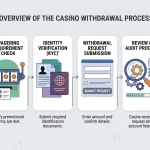
Withdrawal conditions deserve particular scrutiny, even when you are comparing sites rather than preparing a payment. Look for a clear explanation of how a withdrawal request is assessed, which currencies and networks are supported for payouts, and whether identity documents must be supplied before funds can be released. You must provide identity verification documents before withdrawals can be processed. A site that leaves this requirement unclear may create an unpleasant surprise when you try to access your balance.
Also check that the operator explains how it handles complaints and account disputes. Find out whether there is a stated process, who reviews a complaint, and whether the operator identifies an external body for unresolved cases. Do not assume that an offshore regulator or dispute process offers the same routes available through an Australian service. If the terms do not say what happens when an account is restricted or a withdrawal is questioned, that uncertainty is itself relevant to a comparison.
Separate site features from evidence of accountability. A polished interface, a large games catalogue, or a Bitcoin deposit option does not establish who is responsible for the service. Nor does accepting cryptocurrency make a site safer or more accountable. Compare the information the operator publishes, not just the features it promotes. Be wary of claims that cannot be checked against the terms, a named legal entity or a regulator’s own records.
Do
- Verify the jurisdiction and legal entity name
- Check the regulator’s public register
- Review withdrawal and verification rules
- Identify the external body for disputes
Don’t
- Rely on badges or logos as proof
- Assume offshore licences are local approval
- Trust vague promises over the terms
- Use a VPN to bypass restrictions
If you are registered with BetStop or a state-based self-exclusion program, you must also self-exclude directly with each offshore platform. Do not assume an offshore site is connected to those Australian systems. And do not use a VPN to get around geographic restrictions: doing so can breach the site’s terms and put your account or winnings at risk.
A useful comparison should make the limits plain rather than turning them into fine print. Record what you can verify about the operator, the jurisdiction it claims, the withdrawal and verification rules, and the complaint process. If a material point is missing or contradictory, treat it as unresolved—not as reassurance.
Live casino games: check the legal and payment limits
A live casino can look different from a standard online game because a human dealer appears on screen and players take part through a digital interface. That format does not create a separate legal category in Australia. The relevant issue is the service being offered to people in Australia, not whether a game is presented as live, uses a computer-generated display or accepts cryptocurrency.
The Interactive Gambling Act 2001 prohibits operators from providing online casino-style games to Australian residents. Its scope includes familiar table games such as blackjack, roulette and poker, as well as slots. A live-dealer version remains an online casino-style service: putting a dealer on camera does not take it outside the rules. Nor does a site avoid the restriction by describing itself as an entertainment platform or by routing a transaction through a digital wallet.
Casinos That Accept POLi in Australia: What to Verify
This distinction matters when assessing a live casino accepting Bitcoin. Bitcoin is a payment method, not permission to provide gambling services. A site’s willingness to accept BTC says nothing by itself about whether it is authorised to serve people in Australia, and it does not mean the site is locally regulated. Australia does not provide a domestic licence for online casino games; an Australian licence is not a route by which an operator can lawfully offer these games to residents.
Searches for a “best” live casino or a Bitcoin casino with a no-deposit bonus can make the issue seem like a comparison of features. But payment options and promotional offers do not resolve the legal question. A live stream, a polished interface, or a bonus attached to an account cannot change the nature of the service. Likewise, an offshore operator’s claims about its licence should not be mistaken for Australian approval. Offshore status is not the same as local regulation.
It is useful to separate two questions: what a site says it offers, and what Australian law allows an operator to offer people here. The Act primarily places the prohibition on providers. That does not turn the service into an Australian-licensed casino if a resident can open an account or make a Bitcoin payment. A website being reachable, or a transaction appearing to work, is not evidence that the offering is lawful or subject to Australian oversight.
Payment information deserves particular care, but it is a separate issue from the legal status of live play. A casino may state that it accepts Bitcoin for deposits or withdrawals; those statements describe its payment arrangements, not its regulatory standing. They also do not establish that every payment method is available for every account or that a payout will be processed on particular terms. Treat payment claims as operational details, not a substitute for checking what service is being offered and to whom.
The Interactive Gambling Act 2001 prohibits operators from providing online casino-style games, including live-dealer versions, to Australian residents.
If you are considering a live-casino site, do not infer legality from the presence of a dealer, the use of BTC, or a licence issued overseas. The central Australian rule is that operators must not provide online casino-style games to residents. The same caution applies whether you found the site through a live-dealer search, a Bitcoin casino comparison or a promotion. Those labels may describe the format or payment option, but they do not override the law.
Bitcoin casino bonuses: read the terms before you deposit
A Bitcoin casino bonus can look generous while being difficult to use. The headline offer is only one part of the deal: the full terms determine whether you can claim it, which games count towards any conditions and what happens when you request a withdrawal. Do not assume a bonus is available simply because a site advertises one.
Start with the wagering requirement. This sets how much qualifying play is required before bonus funds or related winnings can be withdrawn. Check whether the requirement applies to the bonus alone or to the bonus and your deposit together, and whether the terms explain how each wager is counted. If the calculation is unclear, you cannot reliably judge what accepting the offer would commit you to.
Next, look for game restrictions. Terms may exclude some games or count play on different games at different rates. An offer described as suitable for online slots, for instance, may not allow every slot to contribute equally—or at all—to its conditions. Check whether the restrictions cover the games you intend to play, rather than relying on the promotional headline.
Casinos That Accept Visa in Australia: What to Check
Maximum cashout limits matter too. A bonus may cap the amount you can withdraw from qualifying play, even if the account balance is higher. Confirm how the cap is defined and whether it applies to bonus winnings, the whole balance or another category of funds. If the wording does not make that clear, treat the uncertainty as a material cost, not a minor detail.
Check the payment rules before accepting an offer. Some bonus terms exclude particular deposit methods, and a site may treat cryptocurrency deposits differently from other payments. Confirm that Bitcoin deposits qualify for the offer and that the same currency is supported for withdrawals. Do not assume that a Bitcoin casino deposit bonus applies to every transaction or that a no-deposit offer has no conditions; both claims need to be tested against the actual terms.
Also note when an offer expires, what action activates it and whether opting in is required. These conditions vary by offer, so there is no sound basis for assuming that a free-play promotion or a no-deposit Bitcoin bonus is currently available. A bonus is not cash in hand: restrictions can make its practical value very different from the advertised figure.
Australian readers should keep the legal position in view while reviewing promotions. The Interactive Gambling Act 2001 prohibits operators from providing online casino-style games to people in Australia; Bitcoin does not change that rule. Real-money online gambling is illegal in Australia unless operated under a valid offshore licence, but an offshore licence is not an Australian licence or permission to offer casino games locally. The prohibition is directed at providers, not players. Do not use a VPN to evade location restrictions. If you are registered with BetStop or a state-based self-exclusion program, you must also exclude yourself directly with each offshore platform.
Legal Risk Real-money online gambling is illegal in Australia unless operated under a valid offshore licence, and using a VPN to evade restrictions can breach site terms.
Finally, read the withdrawal conditions alongside the bonus rules. Players must provide identity verification documents before withdrawals can be processed. If the terms reserve broad discretion to withhold a payout or do not explain how bonus funds are separated from other funds, that is a reason to pause before depositing—not a detail to sort out after a win.
What accepting Bitcoin means for Australian players
A casino’s decision to accept Bitcoin is a payment choice, not a statement about its legal status in Australia. The Interactive Gambling Act 2001 does not specifically name Bitcoin or cryptocurrency. Its rules apply to the service being offered: operators are prohibited from providing online casino games to people in Australia under an Australian licence. Australia does not issue a domestic licence for online casino games.
That distinction matters when a site describes itself as licensed offshore. A foreign licence is not an Australian licence, and it does not mean the operator is authorised under Australia’s regulatory framework. The practical caution is that real-money online gambling is illegal in Australia unless operated under a valid offshore licence; even then, offshore licensing should not be mistaken for local approval or a guarantee of protection under Australian rules.
The Act primarily places the prohibition on the provider, rather than making it an offence for an Australian player simply to access an offshore-licensed casino. In other words, the legal responsibility described by the Act rests on the entity offering the service. This does not turn an offshore site into a locally regulated casino, nor does accepting BTC alter who is responsible for providing the gambling service.
For a player considering a casino that accepts Bitcoin, separate three questions: does the site take BTC, does it hold a licence in another jurisdiction, and is it permitted to offer casino games to people in Australia? The first is about payment; the second concerns the site’s claimed oversight elsewhere; the third concerns Australian law. A positive answer to either of the first two does not by itself settle the third.
Casinos That Accept Tether USDT in Australia
Be cautious with wording that blurs these distinctions. “Licensed” without naming the licensing jurisdiction tells you little about Australian status. Likewise, Bitcoin acceptance is not evidence that a site has been approved by an Australian regulator. No domestic online-casino licence exists for a provider to point to as Australian authorisation.
This is a narrow legal explanation, not a recommendation to play. If you are registered with BetStop or a state-based self-exclusion program, you must also self-exclude directly with each offshore platform; registration does not automatically apply there. A site’s payment options cannot override that practical requirement or change the legal position.
So the useful takeaway is limited but important: Australian law does not single out Bitcoin, and the player is not the target of the Act’s provider prohibition. The operator’s location, licence and conduct are separate from the currency used. A Bitcoin casino should not be described as legally operating within Australia merely because it accepts Australian customers or holds a licence overseas.
From wallet to casino account: getting started carefully
Before transferring Bitcoin, check that the service accepts it for deposits and can pay withdrawals to the wallet you intend to use. Deposit support does not automatically mean the same coin or network is available for cashouts. Also read the service’s withdrawal instructions and identity-verification requirements before sending funds; you may have to provide documents before a payout can be processed.
A specialist review describes the basic deposit flow as sending crypto from your wallet to an address supplied for your account. Treat that address as specific to the transfer: copy it carefully, then compare the first and last characters with the address shown on the casino’s payment screen. Check that the selected network matches the casino’s instructions. A valid-looking address on the wrong network can still send funds somewhere they cannot be recovered from.
Crypto transfers are irreversible. If you send Bitcoin to the wrong address or use an unsupported network, the funds may be permanently lost. Do not rely on a saved address from an earlier payment without checking it again, and do not send until the amount, address and network all match the current instructions. The transaction is recorded on the blockchain, where its progress can be checked, but that record does not provide a way to undo an incorrect transfer.
Casinos That Accept MiFinity in Australia: What’s Verified
After sending, the casino may wait for blockchain confirmations before crediting the account. A specialist review also describes some services allowing play after a deposit is detected, before it is fully confirmed. That is a feature to verify in the service’s own current payment terms, not an assumption to make: a pending deposit is not the same as a confirmed balance, and the service’s rules determine when funds become available.
Before making any transfer, confirm how withdrawals work as well. Check that Bitcoin is supported for payouts, what information the withdrawal form requires and whether identity documents must be approved first. Use a wallet address you control and check it against the selected network. A deposit route and a withdrawal route may have different requirements, so do not assume that being able to send funds means you can receive them the same way.
If you are registered with BetStop or a state-based self-exclusion program, you must also self-exclude directly with each offshore platform. Do not use a VPN to get around location restrictions: doing so may breach the platform’s terms and put your account or winnings at risk. Finally, Bitcoin’s value can change while funds are held. A balance shown in Bitcoin may not retain the same value in Australian dollars by the time you use it or request a payout.
Which casino games can Bitcoin be used to play?
Bitcoin is a payment method, not a type of casino game. A site may describe games as Bitcoin casino games because it accepts BTC for deposits or payouts, but the game itself is still a slot, card game or table game. Using cryptocurrency does not change what the game is or how Australian law treats it.
The Interactive Gambling Act 2001 prohibits operators from providing online casino-style games to people in Australia. The covered categories include slots, poker, blackjack and roulette. The rule concerns the service offered to someone in Australia; accepting Bitcoin does not create an exception or make a prohibited game permissible.
Slots (Pokies)
Games based on reels or similar displays with outcomes determined by the game.
Poker
Card-based games offered in various online formats.
Table Games
Includes blackjack and roulette, each with distinct rules and outcome methods.
Slots, often called pokies in Australia, are based on reels or similar displays and outcomes determined by the game. Poker involves cards and may be offered in different online formats. Blackjack and roulette are table games with distinct rules and ways of producing an outcome. Those differences may matter to someone comparing game types, but they do not alter the legal category: each is an online casino-style game when provided through an online service.
Searches for a “Bitcoin slot game” or other BTC casino games can blur two separate questions: what the game is, and how the site handles payment. A Bitcoin label tells you about the payment option claimed by the site, not whether a game is lawful to offer to Australian residents, locally licensed or subject to Australian oversight. Nor does a cryptocurrency payment turn a casino game into a different kind of service.
This distinction matters even when a site presents its games as entertainment or separates its cashier from the game lobby. The relevant point is the nature of the service being provided online, not the currency used to access it. A poker table does not become a different legal product because the account balance is shown in BTC rather than Australian dollars.
There is no need to identify a particular title or provider to understand the boundary. The named categories are all included in the prohibition on operators offering online casino-style games to Australian residents. Treat claims about “Bitcoin games” as payment descriptions, not as evidence that the underlying games are available under Australian rules.
Casinos That Accept PayID in Australia: What’s Known
Bitcoin casino payments: network costs and alternatives
When you send cryptocurrency to a casino, the transfer is broadcast to its blockchain network and recorded there. The public record lets the transaction be checked, but it does not make a payment reversible or guarantee that the casino will credit it correctly. A specialist review describes wallet-to-wallet transfers as the payment route and blockchain records as the means of verification. Check the receiving address and the required network before sending; a mismatch can mean permanent loss.
Bitcoin, Litecoin and Ethereum each use their own network rules, so the coin accepted by a site is only part of the decision. The network also affects fees and the wait for confirmations—the process by which the blockchain adds a transaction to its record. A casino may require confirmation before treating a transfer as received, and its own crediting procedure can add another step.
Bitcoin can take longer to confirm than Litecoin or Ethereum, according to a specialist review. That is a comparison, not a fixed timetable: congestion and the fee attached to a transaction can affect when it is included. Bitcoin fees fluctuate, and one specialist review reports that they can reach AUD 10–20 during peak periods. That figure describes a possible peak, not a standing charge.
Ethereum fees can also rise above Bitcoin’s when its network is busy, the same type of review notes. Litecoin is sometimes presented as a lower-fee alternative, but the relevant cost is the fee shown for the transaction at the time you send it, not a general claim about which coin is cheapest. Fees change with network conditions, and a casino may set its own deposit or withdrawal rules separately.
Before choosing a payment method, confirm that the casino supports that coin for both deposits and withdrawals. A site accepting a cryptocurrency for deposits does not, by itself, establish that it will pay out through the same asset or network. Compare the network specified on the payment screen with the one selected in your wallet; token networks with similar names are not interchangeable.
Cryptocurrency Network Comparison
Bitcoin can take longer to confirm and fees may reach AUD 10–20 during peak periods. Ethereum fees can also rise during congestion, while Litecoin is sometimes presented as a lower-fee alternative.
Crypto prices can move while funds are in transit or held in an account. The value shown when you send a deposit may therefore differ from its value later, even when the blockchain transfer itself is successful. Treat the network fee, the casino’s processing rules and price movement as separate costs and risks—not as one convenient “crypto fee.”
Bitcoin deposits and withdrawals: timing, tax and price risk
A Bitcoin deposit does not appear in a casino account simply because you have sent it. The transaction must be recorded on the blockchain, and the casino may wait for confirmations before crediting the funds. A specialist review describes a Bitcoin confirmation as taking 10–60 minutes, depending on network congestion and the fee paid; it also reports that some casinos require 1–3 confirmations. These are reported conditions, not a guarantee of how long a particular transfer will take.
Withdrawal timing has separate stages. A specialist review reports that casino-side processing may add 12–48 hours before a Bitcoin payout is sent, and that the transfer may then reach a personal wallet within an hour. Treat those figures as that review’s account, not a standard service level. The operator’s checks and the blockchain transfer can both affect when you receive funds.
Before requesting a withdrawal, expect to provide identity documents if required. Check that the casino supports withdrawals to your chosen cryptocurrency and wallet. Bitcoin transfers cannot be reversed: sending funds to the wrong address or network can mean permanent loss. Bitcoin’s price can also change between deposit and withdrawal, so the value of a balance or payout in Australian dollars may rise or fall.
Tax treatment depends on what happens to the cryptocurrency, not just on the gambling result. The ATO generally treats recreational gambling winnings as windfalls rather than taxable income. But it treats cryptocurrency as an asset for capital gains tax purposes. If you buy Bitcoin, deposit it, withdraw winnings in Bitcoin and later sell that Bitcoin for more than its relevant cost, the price gain may be subject to capital gains tax. Keep records of purchases, transfers and sales so you can distinguish the gambling outcome from any later change in the asset’s value.
Casinos That Accept Google Pay in Australia
Bitcoin slots: what the rules mean before you play
Bitcoin changes how a casino account may be funded; it does not change how Australian law classifies the game. Under the Interactive Gambling Act 2001, providing online casino-style games to people in Australia is prohibited. Slots are included, alongside poker, blackjack and roulette.
That distinction matters when a site describes itself as a Bitcoin casino or promotes Bitcoin slots to Australian users. Accepting BTC does not create an exception to the rules, and a foreign licence does not amount to an Australian licence or make the service locally authorised. Australia does not issue domestic licences for online casino games.
The prohibition is directed at the operator providing the service, rather than making the player’s use of an offshore site a criminal offence. Still, that does not make an online slots service lawful to offer in Australia. Nor does a payment method settle whether a site is licensed in the jurisdiction it names, or what protections apply if a dispute arises.
If you encounter a site offering slots for Bitcoin, treat its claims about licensing and access with care. A label such as “licensed Bitcoin casino” is incomplete unless it clearly identifies the licensing jurisdiction; even then, an offshore licence is not approval to provide online slots to people in Australia. The game remains within the category the Act prohibits operators from offering to Australian residents.
This applies to the online format, not merely to a particular title or payment option. Switching from a bank payment to BTC, or choosing a different slot on the same platform, does not alter the legal status of the operator’s offer. The practical point is simple: Bitcoin may be part of a site’s payment system, but it does not make online slots an Australian-licensed service.
Payments

Anonymous Crypto Casinos in Australia: Payments & Privacy
Bitcoin transfers depend on network confirmations, casino processing rules and BTC exchange value, while privacy...

Aristocrat Online Pokies in Australia: What to Know
The phrase alone does not verify a game, its provider, or whether an online casino...

Aussie Crypto Casinos: How Offshore Sites Work
Offshore status, crypto payments and site claims shape what can—and cannot—be verified about these services....

Best New Australian Online Pokies: Legal Limits
The guide separates game and payment searches from the legal status of real-money online casino...

Online Casino Payment Methods for Australians
Availability, processing speed, fees and withdrawal checks can differ by operator and payment route. Payment...

Best Paying Online Pokies in Australia: What to Know
Understand what offshore licences, bonus rules and Bitcoin transactions mean before assessing returns or considering...

Bitcoin Pokies in Australia: Payments, Risks and Rules
Bitcoin is a payment method, not a slot-game format; the distinction affects how risks, withdrawals...

Amex Casino Sites in Australia: Payment Guide
Amex appearing in a cashier does not establish legality, guarantee authorisation or mean withdrawals can...
Casino Sites That Accept BPAY in Australia: What to Check
BPAY availability is only one part of the picture; Australian gambling rules and a site's...

Australian casino sites that accept credit cards
A cashier’s card options do not determine legality; the guide explains Australian restrictions and how...

Casino sites accepting EcoPayz in Australia: what to check
EcoPayz availability, payment conditions and Australian legal context are separate questions; a casino listing alone...

Osko Casino Sites in Australia: Rules and Checks
Australian rules restrict operators from offering real-money online casino services locally, while payment claims require...

Casino Sites That Accept Paysafecard in Australia
Paysafecard may be listed as an account-funding option, but that alone does not confirm Australian...

Skrill and Australian Casino Sites: What to Know
Skrill listings cannot confirm an operator’s legal status, payment protection, deposit terms or withdrawal timing....

Trustly Casino Sites in Australia: What to Check
Trustly availability depends on the service and customer context; payment claims do not establish Australian...

Under an Hour Casino Withdrawals in Australia
Withdrawal timing depends on both the operator’s review and the payment method used to transfer...

No-verification casino withdrawals in Australia
A low-information sign-up does not guarantee an unchecked cashout; identity checks may arise before a...

Apple Pay at Australian Casinos: What the Evidence Shows
Everyday wallet use does not confirm casino support; this guide separates Australian payment habits from...

Casinos That Accept Bitcoin Cash in Australia: Checks
Bitcoin Cash is only a payment method; it does not verify game access, withdrawal terms,...

CashToCode Casinos in Australia: What Can Be Verified
A payment mention or Australian-facing page alone does not confirm local acceptance, so deposits, payouts...

Ethereum Casino Payments in Australia: What to Check
Ethereum may support casino deposits and withdrawals, but payment labels alone do not establish timing,...
Casinos That Accept Google Pay in Australia
Google Pay’s everyday acceptance in Australia does not establish availability at a specific online casino...

Litecoin Casinos in Australia: Legal Context
A Litecoin payment option does not verify a casino’s legality, game availability or player protections...

Casinos That Accept Mastercard in Australia
Widespread contactless card use does not confirm that an online casino accepts Mastercard or supports...

Casinos That Accept MiFinity in Australia: What’s Verified
Card acceptance and general cashier details cannot confirm MiFinity support, so the available evidence does...

Casinos that accept Neosurf in Australia: what to know
Neosurf availability alone does not establish that an online casino can legally serve people in...

Casinos That Accept Neteller in Australia: What to Check
A practical look at what search wording can establish, why cashier terms matter, and what...

Casinos That Accept PayID in Australia: What’s Known
Australian payment habits provide context, but they do not verify a casino’s PayID options, game...

Casinos That Accept PayPal in Australia: What to Check
PayPal availability does not make an offshore casino lawful in Australia; this guide explains the...

Casinos That Accept POLi in Australia: What to Verify
POLi availability depends on each operator, and general references to Australian casinos or pokies do...

Casinos That Accept Tether USDT in Australia
Australia’s rules for online casino services and the limits of payment evidence are separate from...

Casinos That Accept Visa in Australia: What to Check
The available comparison indicates possible wider acceptance than Amex, while leaving operator support, withdrawals and...

Dragon Link Online Pokies in Australia: What to Check
A familiar game name alone does not confirm the version, availability or terms of online...

Easy Withdrawal Casinos in Australia: How Payouts Work
A practical guide to approval checks, payment-method trade-offs, bonus conditions and account details that can...

Fast withdrawal casinos in Australia: payout guide
E-wallets, cards, bank transfers and crypto differ in availability, while casino approval, verification and limits...

Instant Bank Transfers at Australian Casinos
Bank transfer can mean a direct payment or a bank-linked service, and deposit availability does...

Instant PayID Withdrawals for Real Money in Australia
PayID timing depends on operator approval and release, while bonus conditions and extra checks can...

Instant PayID Withdrawals in Australia: How They Work
PayID can move approved funds in real time, while casino checks, first withdrawals, limits and...

PayID pokies in Australia: payments and checks
PayID moves money between bank accounts through the NPP, but it does not establish whether...

No-KYC Casinos in Australia: Crypto Payments Explained
Crypto transfers may be near-instant, but account updates and withdrawal approval are separate steps with...

Online Pokies Instant Withdrawals in Australia
A withdrawal may still wait for account review and approval before the payment provider begins...

Online pokies with PayID in Australia: terms
PayID may speed up a transfer, but operator rules still determine accepted amounts, withdrawals and...

Pay by Phone Casinos in Australia: Payment Guide
The key distinction is whether a payment comes from a phone account or from a...

Quick Withdrawal Casinos in Australia: How Cashouts Work
Cashout timing depends on operator review as well as the payment route used after a...

Real cash online pokies in Australia: how they work
The guide distinguishes game credits and promotional balances from money with external value, and explains...

Safe Online Pokies in Australia: What to Check
Understand what licensing can establish, what payment checks can verify, and where protections may fall...

Same-Day Payout Casinos in Australia: What to Know
A withdrawal may move quickly only after an operator approves it; the review and transfer...

Solana casino comparison for Australians
Understand the rules for offshore casinos, how SOL payments work, and why bonus terms and...