Curaçao Casino Licence for Australian Players
 Available in AU

A Curaçao connection or licence claim does not establish permission to offer online casino games to Australian residents.
Table of Contents
- What “Online Casino” Means Under Australian Law
- A Curaçao Casino Is Not a Curaçao Casino Destination
- What an Offshore Licence Does—and Does Not—Prove
- How to Check Australian Gambling Information
- Casino Games and the Australian Rules
- Safety Claims Do Not Replace Player Protections
- Crypto Payments Do Not Resolve the Licensing Question
- Why a New Site Can Disappear from Australia
- The 2026 Question: Access, Enforcement and Your Options
- Access Safety
What “Online Casino” Means Under Australian Law
An online casino can mean two different things: a website that you can reach from Australia, or a service that is legally entitled to provide casino gambling to people in Australia. Those are not the same. A page loading on your phone is evidence of access, not evidence that the operator may lawfully serve Australian customers.
The distinction matters when a site describes itself as an online casino connected with Curaçao. That description may tell you something about how the operator presents its business, but it does not answer the Australian legal question. The name of a location, a licence claim or an available sign-up page cannot by itself establish permission to offer gambling here.
Australian law focuses on what an operator provides and to whom. The Interactive Gambling Act 2001 prohibits operators from offering online casino games to Australian residents. In practical terms, an overseas website does not become an authorised Australian service simply because it is run from outside the country or can be reached from an Australian internet connection.
If you’re considering a Curacao-licensed casino as an Australian player in 2026, this list gives you a quick reference to the details available for each operator. Use those details as a starting point and check the terms that matter to you before signing up.
1. LuckyVibe
License: Curacao Gaming Control Board OGL/2023/176/0095 (Hollycorn N.V.) LuckyVibe lists Curacao Gaming Control Board license OGL/2023/176/0095, held by Hollycorn N.V. That gives you a specific license reference to check.
2. Golden Pokies
License: Curacao Golden Pokies is listed as having a Curacao license. The available information does not specify a license number or license holder.
3. Vegaz Casino
License: Curacao OGL/2024/1335/0780 · Min. deposit: EUR 20 Vegaz Casino lists Curacao license OGL/2024/1335/0780 and a minimum deposit of EUR 20. You can use those details when reviewing its licensing and deposit terms.
4. Bizzo Casino
License: Curacao Gaming Control Board (TechSolutions Group N.V.) Bizzo Casino is associated with the Curacao Gaming Control Board, with TechSolutions Group N.V. identified. This gives you a named entity to consider when checking its licensing details.
5. DragonSlots Casino
License: Curacao Gaming Authority (Jumpman Gaming Ltd) DragonSlots Casino is listed under the Curacao Gaming Authority, with Jumpman Gaming Ltd identified. The available details provide a licensing reference for you to review.
6. Kingmaker
Payout speed: crypto ~90 minutes, fiat 1-5 days · Min. deposit: A$30 Kingmaker lists a minimum deposit of A$30 and payout estimates of around 90 minutes for crypto and 1–5 days for fiat. These details may help you assess its deposit and withdrawal timelines.
7. Uptown Pokies
License: Curacao (operating since 2017) · Min. deposit: A$20 Uptown Pokies is listed as Curacao-licensed and operating since 2017, with a minimum deposit of A$20. Its stated operating history and deposit threshold are useful points for you to check.
8. GoldenCrown
License: Curacao Gaming Control Board OGL/2023/176/0095 (Hollycorn N.V.) GoldenCrown lists Curacao Gaming Control Board license OGL/2023/176/0095, held by Hollycorn N.V. You have a specific license reference to review.
9. Wild Tokyo
License: Curacao · Payout speed: crypto 30-60 minutes, fiat 1-5 days · Min. deposit: A$10 Wild Tokyo is listed as Curacao-licensed, with a minimum deposit of A$10. Its stated payout estimates are 30–60 minutes for crypto and 1–5 days for fiat.
10. Ricky Casino
Payout speed: crypto under 1 hour, PayID 1-3 business days · Min. deposit: A$20 (A$30 to qualify for the bonus) Ricky Casino lists a minimum deposit of A$20, or A$30 to qualify for the bonus. Its stated payout estimates are under an hour for crypto and 1–3 business days for PayID.
This is why “available in Australia” can be misleading. A site may accept visits, display Australian currency or show a registration form, yet those features do not establish that it is permitted to provide its gambling service to people here. Nor does a successful account registration settle the legal position. The relevant issue is not only whether a website works, but whether the service it offers is lawful for Australian customers.
The law’s focus on operators should also be distinguished from the position of individual players. The Interactive Gambling Act 2001 does not explicitly make it a criminal offence for an individual to use an offshore casino site. That does not turn the service into a lawful Australian casino, and it should not be read as an endorsement or assurance that using one is safe. The legal treatment of the operator and the legal treatment of a customer are separate questions.
If you are assessing a site, avoid treating its own statements as a substitute for independent legal information. Phrases such as “international casino,” “available to Australian players” or “licensed overseas” describe what the business claims or how it markets itself; they do not establish that it is licensed in Australia. An offshore licence is not an Australian licence, and an operator’s willingness to accept customers does not confer local authorisation.
There is also a practical difference between access and protection. Where a service is not licensed in Australia, you should not assume that Australian consumer protections for licensed services apply. If an operator refuses a withdrawal or closes an account, Australian laws may not assist you in recovering money from an offshore business. That is a material risk, not a technical footnote to the site’s terms.
Highest Payout Online Casino Australia: RTP Explained
A virtual private network, or VPN, does not resolve the issue. Using one to reach a casino may breach the operator’s rules and can lead to winnings being voided, an account being closed or a deposit being lost. It also does not change the nature of the service under Australian law. Changing the apparent location of your internet connection is not the same as changing the operator’s legal permission.
For a reader encountering the phrase “Curaçao online casino,” the useful first step is therefore to separate three claims: that the website exists, that it is accessible, and that it may lawfully offer its gambling service in Australia. The first two can be true without the third. Treating them as interchangeable gives a website’s availability more legal significance than it has.
The basic position is straightforward, even if the terminology on gambling sites is not: being able to visit an offshore casino site from Australia does not mean it is legally entitled to offer casino gambling to Australian residents. A claim of foreign oversight does not, on its own, alter that distinction.
A Curaçao Casino Is Not a Curaçao Casino Destination
When people describe a site as a Curaçao casino, they generally mean an online gambling service associated with Curaçao. They are not necessarily talking about a building on the island, a holiday destination or a casino you could visit in person. The label points to how a website presents its connection to Curaçao; it does not, by itself, tell you where its customers are or whether it can legally offer games in Australia.
A "Curaçao casino" usually refers to an online gambling service associated with the jurisdiction of Curaçao, not a physical building or holiday destination on the island.
That distinction matters because “casino in Curaçao” can sound like a statement about a physical place. In a web address, advert or account page, however, the reference is more often part of the site’s description of its offshore identity. A visitor may see Curaçao mentioned alongside game menus and payment options and take it to mean the service is suitable for Australians. The geographic association alone cannot establish that.
A place, a website and a legal question
The question “Does Curaçao have casinos?” could be asking about physical venues on the island. That is different from asking whether an online casino uses Curaçao in its branding or claims a connection there.
Even when a site’s name or wording refers to a particular place, that does not mean the service is physically located there in every relevant sense. Nor does the label explain which customers the operator intends to serve. A website can be accessible from Australia without that access making its games lawful to offer here.
For an Australian reader, the central issue is not whether Curaçao exists as a destination or whether a website uses its name. It is what the site is offering to people in Australia. Australian law does not permit online operators to provide casino-style games such as slots or blackjack to people here. A location reference on a site does not alter that position.
$5 Minimum Deposit Pokies in Australia: Explained
This is why phrases such as “Curaçao casino” and “casino with a Curaçao connection” should be read as descriptions of the website, not as answers to the Australian legal question. They may tell you how the service identifies itself. They do not turn an online gambling service into a local venue, and they do not make the service an authorised Australian casino.
What the label does not tell you
A site’s wording can be broad. It might refer to an offshore business, a claimed regulatory connection, or simply a brand identity. Without looking beyond the label, you cannot tell what exactly the operator means by it. The phrase itself is not a reliable guide to the site’s terms, the people it accepts as customers or the laws that apply to an Australian user.
Nor is “Curaçao casino” a separate category of game. Slots remain slots; blackjack remains blackjack. Changing the description of the website does not change the nature of the games being offered. If a service lets someone in Australia play those games for money online, calling it a Curaçao casino does not make the offering permissible under Australian rules.
The distinction can be easy to miss because online services cross borders in ways physical venues do not. A webpage may be hosted, operated, branded or supported in different places, while the person using it is physically in Australia. For the reader, the familiar place name can make the service seem more concrete than it is. But the name is not a map of the operator’s arrangements, and it is not a ruling on whether Australians may be served.
Critical Risk
Using a VPN to access restricted casinos may lead to your winnings being voided, your account being closed, or your deposits being lost.
This also explains why searching for a casino associated with Curaçao should not be treated as equivalent to choosing a destination. A real-world trip involves questions about venues and travel. An online service involves a separate question: whether the operator may provide its games to a person in Australia. Those questions should not be folded together just because the same place name appears in both.
The Australian-facing meaning
In everyday use, a Curaçao casino is usually an online casino that presents itself as connected with Curaçao. “Curaçao casino licence” similarly tends to refer to a claimed offshore status, rather than a licence to operate an online casino under Australian law. The wording can sound reassuring, but it does not answer whether Australian residents can lawfully be offered the games.
That is the practical point for anyone in Australia: an offshore association does not create an exception for online casino games. Australian law bars providers from offering real-money casino games, including slots and table games such as blackjack, to people located here. A website’s country reference does not change the rules that apply to the Australian-facing offer.
It is also worth separating a site’s claim from what the claim means. A label is something the operator has chosen to display; it is not, on its own, evidence of permission to operate in Australia. The detail and significance of an offshore licence are a separate matter. For now, the key distinction is simpler: a website linked in its presentation to Curaçao is not the same thing as a physical casino destination, and neither description answers whether it may offer online casino games to Australians.
$10 Minimum Deposit Pokies in Australia: How It Works
If you came across the term while looking for a place to visit, treat it as ambiguous until you know whether the discussion concerns a venue or a website. If it appears beside online slots, blackjack or other casino games, it is describing an online service. For someone in Australia, that service should not be mistaken for an Australian-authorised gambling option simply because a foreign place name appears in its branding.
The wording can suggest geography, business identity or a claimed offshore connection. None of those meanings changes the basic Australian-facing distinction: online casino games offered to people here are not made lawful by attaching Curaçao to the name. A place reference is a description, not permission.
What an Offshore Licence Does—and Does Not—Prove
A casino may describe itself as licensed in Curaçao, but that statement does not mean it is licensed in Australia. An offshore licence refers to a permission or status claimed in another jurisdiction. It is not an Australian authorisation, and it does not by itself establish that the operator may offer online casino games to people in Australia.
That distinction matters because the word “licensed” can sound more comprehensive than it is. A licence associated with Curaçao says nothing, on its own, about whether an Australian regulator has approved the service for Australian customers. It should not be treated as a substitute for an Australian licence, nor as evidence that one exists. The same applies if a site uses phrases such as “regulated casino” or displays a licence badge: those claims do not change the jurisdiction the licence comes from.
Attention: An offshore licence is not an Australian licence and does not establish that an operator has permission to offer online casino games to people in Australia.
The point is not that an offshore licence must be false. A site may genuinely hold a licence issued outside Australia. The narrower question is what that licence proves for someone accessing the site from Australia. It does not establish Australian permission. Treating the two as interchangeable confuses a claim about the operator’s status elsewhere with the rules that apply to services offered here.
The Australian regulator has a separate role
ACMA is the body responsible for regulating online gambling in Australia. Its role is distinct from that of an offshore licensing authority. A foreign regulator’s decision to license an operator does not bind ACMA or replace Australian law.
Under the Interactive Gambling Act 2001, operators are prohibited from providing online casino games to Australian residents. An offshore licence does not create an exception to that rule. In practical terms, a site cannot use its foreign status as proof that it is entitled to serve Australian customers.
ACMA can take enforcement action against operators that breach the Act. Its powers include blocking websites and issuing fines to operators. Those powers concern compliance with Australian requirements; they are not determined by whether a site also claims to hold a licence elsewhere. The existence of an offshore licence therefore does not remove the possibility of Australian enforcement.
This is also why a licence number, logo or statement on a casino’s own pages should be read for what it is: a claim about its offshore status. It is not an Australian approval mark. Even a genuine overseas licence cannot establish that the service is licensed in Australia, because those are different questions handled under different systems.
No Minimum Deposit Casinos in Australia: What It Means
What the claim cannot tell you
A foreign licence does not prove that Australian law permits the service, that ACMA has authorised it, or that Australian consumers have the protections associated with a service licensed here. It also does not guarantee that every statement the operator makes about its regulation is complete or current. The licence claim and the Australian legal position should not be collapsed into one.
The distinction is especially important where advertising presents a Curaçao licence as a broad assurance of legitimacy. “Licensed somewhere” and “licensed in Australia” are not equivalent descriptions. A regulator overseas may have a role in its own jurisdiction, but its decision does not give an operator authority under Australian law.
Nor does a foreign licence turn the user’s location into an irrelevant detail. A service can be based offshore and still be offering its product to people in Australia. The legal question is not answered simply by identifying where a company says it is based or which regulator it names. For Australian readers, the relevant point is whether the service is permitted to offer those games to customers here; an offshore licence does not answer yes.
When a casino markets itself as a Curaçao-licensed casino, the phrase should therefore be understood narrowly. It may describe the operator’s claimed relationship with an overseas licensing system. It should not be read as an Australian licence, a statement of ACMA approval or permission to provide online casino games to Australians. The distinction is not fine print: it is the difference between a foreign status claim and authorisation under the rules that apply in Australia.
Offshore Licences
- A Curaçao licence is not a substitute for Australian authorisation.
- Foreign regulators’ decisions do not bind ACMA or replace Australian law.
- Offshore status does not remove the possibility of Australian enforcement action.
How to Check Australian Gambling Information
When a service describes itself as legal or licensed for Australians, check that claim against ACMA’s public information rather than relying on the operator’s wording. ACMA directs players to its website and the national register to identify gambling products available legally in Australia. The register is also a way to check whether a wagering service holds a valid Australian licence.
Start at ACMA’s official website and locate its public register. Search for the service using the name shown on its website, and check whether the listing refers to the same business. A similar name is not enough: a company, brand and website can use different names, and a listing for one should not be treated as proof about another. If the information does not clearly match, do not assume that the service is covered.
Read what the register says the service is authorised to provide. A licence entry relates to the service and permissions identified there; it is not a general endorsement of every product or activity offered under a brand. In particular, a wagering service appearing in a register should not be taken as evidence that an online casino product is licensed in Australia. The distinction matters when a site presents a broad range of gambling products under one name.
A page describing a Curaçao licence, or a directory calling certain sites the best casinos, does not answer the Australian licensing question. Those descriptions are not substitutes for checking ACMA’s register. Nor should a site’s own licensing page be treated as independent confirmation: it is a claim made by the operator. Use ACMA’s information to test whether the relevant service appears as licensed in Australia, rather than treating a foreign licence as equivalent.
Casinos not on BetStop in Australia: risks and checks
If you cannot find a service, or the register entry is unclear, avoid filling the gap with assumptions based on marketing, customer reviews or a list of casino sites. A missing or ambiguous match does not establish that the service is licensed. You can consult ACMA’s other public information or contact the authority for clarification. Keep the exact brand and web address to hand so you can describe the service you are checking accurately.
This is a practical check, not a ranking exercise. A list of offshore casinos cannot establish which gambling products are legal to use in Australia, and an operator’s claims about its location or licence do not replace the national register. Check the service itself and the product it offers; do not infer Australian authorisation from a licence issued elsewhere, a polished website or a familiar name.
The register is most useful when you treat it as a specific verification tool. It can help establish whether a wagering service holds an Australian licence, but that does not make every service marketed as a casino a licensed Australian casino. Keep the question narrow: does the service you are considering appear in ACMA’s public information as a licensed wagering service, and does that information match the service in front of you? If not, do not rely on the operator’s description as proof.
Checking ACMA Register
Locate the Register
Start at ACMA’s official website and find the public register for gambling products.
Search the Service
Search for the service using the exact name shown on its website to find a match.
Verify Authorisation
Read the entry to ensure the specific business is listed and check what products it is authorised to provide.
Casino Games and the Australian Rules
The legal distinction is about the kind of service being offered, not the name a website gives itself. Under the Interactive Gambling Act 2001, an operator cannot provide real-money online casino games to people in Australia. That includes slots and table games such as blackjack; describing them as “gaming” or placing them on a site associated with Curaçao does not change their character.
Casino-style products such as roulette and online poker also fall within the prohibited category when offered for real money to customers in Australia. A game does not become permissible because it is accessed through a browser, an app or another digital format. Nor does an offshore licence, by itself, amount to permission to offer these games here.
That rule concerns the operator’s provision of the service. The Act does not explicitly make an individual player’s use of an offshore casino a criminal offence. This distinction should not be mistaken for approval or a guarantee of practical protection: the operator’s conduct and the player’s position are separate legal questions.
Online gambling is not one single category. For example, in-play online sports betting—placing a bet while a sporting event is underway—is also illegal in Australia. But that does not mean every form of online wagering is treated as an online casino. The rules depend on the product and how it is offered; the fact that a service involves a bet does not make it a casino game, and calling a casino product something else does not make it a different kind of service.
For a reader assessing a site, the useful starting point is therefore the game itself. Slots, blackjack and comparable real-money casino products are not lawful offerings to Australian customers simply because they are available online or operate from overseas. Marketing labels and a site’s location do not alter the Australian rule.
This also explains why a casino’s presence on a website should not be confused with the rules for other gambling products. A wagering service may offer a different product category, while a casino game remains subject to the prohibition described above. The distinction is about what is being supplied and to whom—not whether the website uses a particular label or presents the game as entertainment.
Safety Claims Do Not Replace Player Protections
A padlock symbol or an “SSL secure” message speaks to the connection between your device and a website. SSL encryption can help protect information sent through that connection, including payment details. It does not establish who operates the site, whether its claims are accurate, or whether it is licensed in Australia. A secure connection is a limited technical safeguard, not a substitute for legal authorisation or consumer protection.
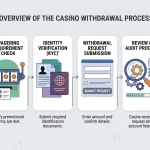
Identity checks are another signal that can be misunderstood. Casinos may require KYC—“know your customer” checks—to verify a player’s identity before approving a withdrawal. You may be asked for photo identification, proof of your address and evidence that you own the payment method used. These checks can be part of an operator’s processes, but completing them does not make the service licensed in Australia.
Do
- Verify the operator’s identity before sharing sensitive data
- Understand document requirements for withdrawals
- Use ACMA’s register to check legal status
Don’t
- Assume a secure SSL connection proves legal licensing
- Rely on KYC checks as evidence of Australian authorisation
- Use a VPN to bypass regional access blocks
Verification can also affect access to your money. If documents are requested, a withdrawal may remain pending while the operator reviews them. Make sure you understand what is required and how documents should be submitted before sharing sensitive information. If the operator rejects a document or asks for more, the review may take longer. That can be frustrating; the more serious concern is having limited recourse if a site withholds winnings or does not resolve a dispute.
An offshore casino may advertise encryption, identity checks or other security features, but those claims do not provide the protections of a service licensed in Australia. Unlicensed gambling services lack Australian consumer protections, and Australian laws may not assist you if winnings are withheld. A polished website is not proof that the business will honour a withdrawal.
Do not use a VPN to reach a casino that blocks access from Australia. A VPN can conceal your location from a website, but it does not change the service’s legal status. Using one may lead to voided winnings, account closure and loss of your deposit.
Before sending identification or payment information, consider whether you can verify who is responsible for the site and what happens if a withdrawal is challenged. If the operator’s identity, terms or verification requirements are unclear, that uncertainty is itself a reason to stop. Security features can reduce some technical risks; they cannot guarantee that an offshore operator will return your money or give you a practical way to enforce your rights.
Crypto Payments Do Not Resolve the Licensing Question
A casino may advertise cryptocurrency deposits or withdrawals, but the payment method does not determine whether the service may legally provide online casino games to people in Australia. Under the Interactive Gambling Act 2001, operators cannot offer real-money online casino games to people physically located here. Paying with crypto does not create an exception.
VPN-Friendly Casinos in Australia: Access Explained
The same applies when a site presents itself as a Curaçao crypto casino. A payment option, a coin logo or a claim about an offshore licence does not make the operator licensed in Australia. These details describe how a site says it handles payments or where it says it is regulated; they do not establish permission to serve Australian customers.
Crypto can also make a dispute harder to resolve. If a service withholds a withdrawal or closes an account, the fact that a transfer was made in cryptocurrency does not itself provide a route to recover funds. An offshore or unlicensed service lacks the consumer protections of a regulated Australian service, and Australian laws may not assist you if winnings are withheld. That is a material risk, not a technical footnote.
Some casino sites use SSL encryption to protect transactions and sensitive information while data is being sent. This is a security measure for the connection. It does not confirm who operates the site, establish that a game is fair, or show that the operator is authorised under Australian law. A secure connection and legal authorisation answer different questions.
Be cautious about treating claims such as “top Curaçao casinos” as evidence of suitability for Australian players. A ranking or promotional description cannot change the legal position, and a payment page cannot substitute for checking the service’s status. In Australia, ACMA is the online gambling regulator; its public information is the relevant place to check legal gambling services, rather than a casino’s own claims about crypto or offshore oversight.
Cryptocurrency payments and SSL encryption are technical and financial features; they do not grant an operator legal permission to provide casino games to Australian residents.
Do not use a VPN to get around a block or access a casino that is unavailable to you. A site may treat VPN use as a breach of its terms, which can result in account closure, voided winnings and loss of your deposit. Crypto does not prevent those outcomes, and an encrypted transfer does not make the underlying service lawful. A payment method is only a way to move funds; it is not a licence, approval or safeguard.
Why a New Site Can Disappear from Australia
A recently launched casino website may look like a fresh option, but its age says nothing about whether it can lawfully serve people in Australia or whether it will remain accessible. A new address can also be difficult to assess: a polished design and claims of a Curaçao connection do not establish that the service is authorised here or dependable.
ACMA can ask internet service providers to block websites that offer prohibited interactive gambling services to Australian customers, as well as services that are unlicensed to provide gambling to adults in Australia. A site that opens today may therefore become unavailable later. That change is not, by itself, proof that a particular customer has done anything wrong; it can reflect enforcement directed at the service.
The scale is substantial. Since ACMA made its first blocking request in November 2019, it has restricted access to 1,369 illegal gambling and affiliate websites. The figure includes affiliate sites as well as gambling services, so it should not be read as a count of newly launched casinos. It does show why a website’s brief availability is a poor test of its status.
Avoid trying to get around a block with a VPN. Accessing a casino this way may lead to winnings being voided, an account being closed or a deposit being lost. Unlicensed services also lack Australian consumer protections, and Australian law may not help you recover winnings that are withheld. A site’s appearance, launch date or continued availability cannot remove those risks.
Secure Online Casinos in Australia: What Security Means
The 2026 Question: Access, Enforcement and Your Options
For an Australian reader in 2026, an offshore licence does not make an online casino licensed in Australia. It describes the operator’s claimed status elsewhere; it does not authorise the operator to offer online casino games to people in Australia. A site loading on your device is not evidence that it is lawful or that it will remain accessible.
ACMA can seek blocking orders against prohibited gambling services. It may use such orders as a last resort when it considers customer safety to be at risk. A block can interrupt access, but it does not resolve disputes with an operator or provide a route to recover money. Trying to get around a block with a VPN is not a safe workaround: doing so may lead to winnings being voided, an account being closed and deposits being lost.
Before using any gambling service, consult ACMA’s public register to check whether a wagering service holds a valid Australian licence. The register helps you identify legal gambling products; it should not be read as approval of an offshore casino simply because that casino displays a Curaçao licence. If a service is not licensed in Australia, it lacks the consumer protections attached to a regulated Australian service, and Australian laws may not help you if it withholds winnings.
The practical choice is therefore not between one offshore licence and another. It is whether to use gambling products that are legal and licensed in Australia, or to accept the access and consumer-protection risks of an offshore service. If you are looking for a Curaçao casino while in Australia, treat its licence as no substitute for Australian authorisation. Check the register, and do not take continued access as reassurance: regulatory action can change what is available.
What are the legal consequences for Australian players using offshore casinos?
Using an offshore casino is not explicitly a criminal offence for an individual under the Interactive Gambling Act 2001, but that does not make the service lawful or safe. If the operator is not licensed in Australia, you should not assume Australian consumer protections will help you recover money if there is a dispute.
How long should a withdrawal take from a secure casino?
After approval, PayID and some e-wallet withdrawals can be quick; bank transfers and card withdrawals can take several business days. Verification may be required first, including proof of identity, address and payment-method ownership.
What responsible gambling tools and support services are available?
Licensed operators provide deposit limits that you can set daily, weekly or monthly. Reputable platforms also provide information about gambling-related harm and direct you to professional support services in Australia.
Access Safety

$1 Minimum Deposit Casinos in Australia
The operator’s stated minimum can differ from a payment method’s floor, while bonus terms and...

$1 Minimum Deposit Pokies in Australia: What It Means
The advertised operator limit can differ from payment-provider rules, leaving the practical deposit threshold higher...

$10 Minimum Deposit Casinos in Australia: What to Check
A stated casino minimum can differ from the amount a payment method accepts, while bonus...

$10 Minimum Deposit Pokies in Australia: How It Works
The amount available at checkout can depend on both the operator’s cashier rules and the...

$2 Minimum Deposit Casinos in Australia: What to Check
Operator and payment-provider thresholds can differ, while promotion terms and withdrawal minimums may affect how...

$20 Minimum Deposit Casinos in Australia: What to Know
The advertised minimum may differ from the amount accepted at checkout or left available after...

$20 Minimum Deposit Pokies in Australia: Explained
The effective minimum depends on both the amount accepted by the payment route and the...

$5 Minimum Deposit Casinos in Australia: Payment Rules
A low operator limit only works when the selected payment service also accepts that amount....

$5 Minimum Deposit Pokies in Australia: Explained
A cashier may allow $5 while its payment service requires a higher amount, so the...

Casinos not on BetStop in Australia: risks and checks
BetStop applies to operators required to use the register, while offshore platforms may not be...

Highest Payout Online Casino Australia: RTP Explained
RTP describes a slot’s designed return over time, but it cannot rank casinos or predict...

Low Deposit Online Casinos in Australia: Minimums
The usable minimum depends on both the casino’s rules and the threshold set by the...

Secure Online Casinos in Australia: What Security Means
Technical safeguards, offshore licences and payment options do not establish that an online casino may...

No Minimum Deposit Casinos in Australia: What It Means
Casino rules and payment-provider limits can differ, so the amount needed to fund an account...

Safe Online Casinos in Australia: Legal Checks
The Interactive Gambling Act 2001 restricts domestic operators, while an offshore site’s accessibility does not...
VPN-Friendly Casinos in Australia: Access Explained
A VPN can route traffic through an external server, but that network change does not...